Last updated 2026-08-14
TL;DR
Kill mosquito breeding by dumping standing water every 4-7 days (their egg-to-adult cycle), then knock down the adult population with a barrier spray on plants and shade areas. No treatment eliminates mosquitoes entirely; the goal is pushing numbers low enough that you can sit outside without getting eaten.
how to get rid of mosquitoes in your yard, step by step
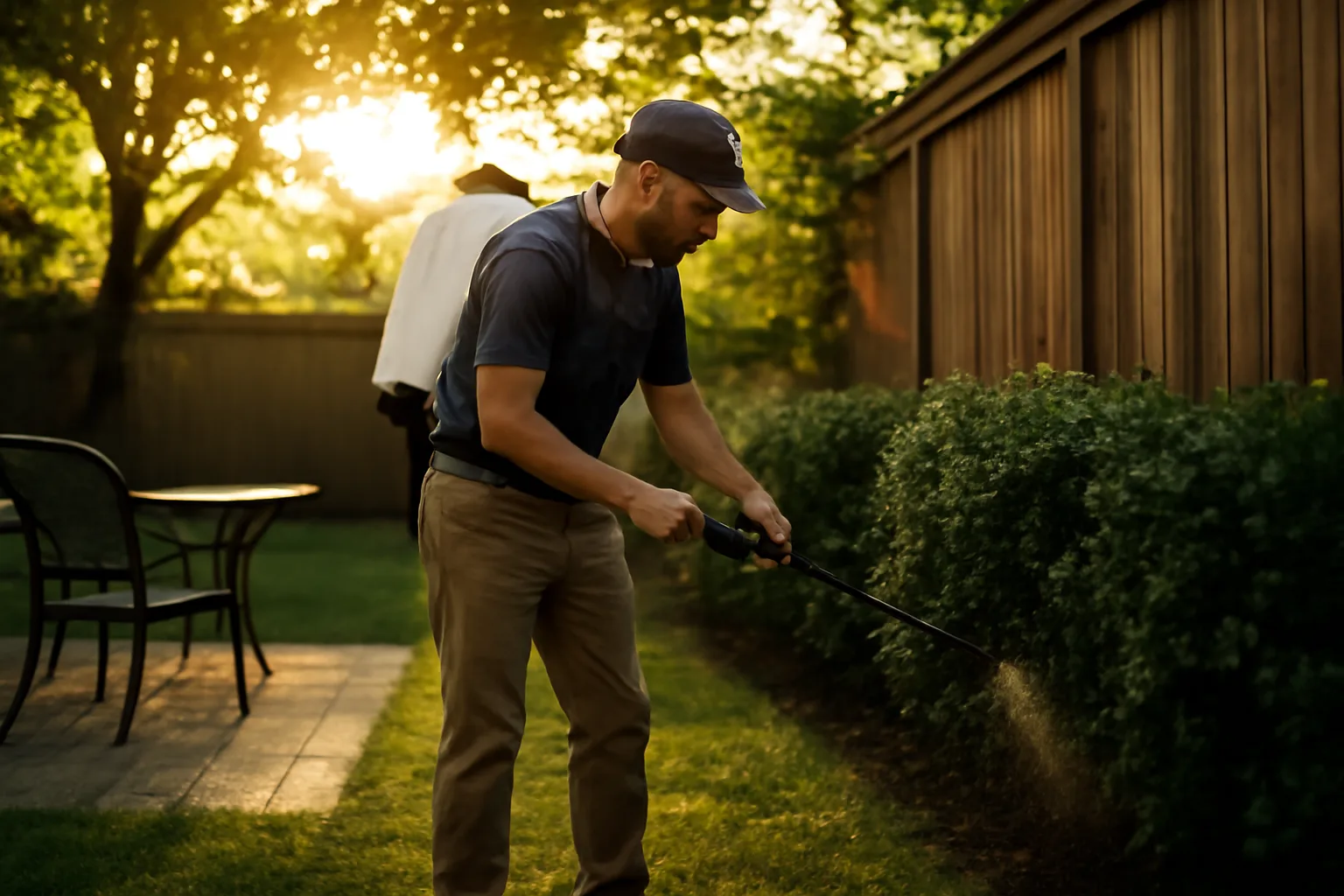
Start with water, not spray. Mosquitoes need standing water to complete their life cycle, and most species can go from egg to biting adult in as little as 7 to 10 days depending on temperature and species [1]. Walk your property once a week and dump anything holding water: clogged gutters, plant saucers, kiddie pools, tarps, old tires, birdbaths that haven't been changed. The CDC specifically recommends emptying and scrubbing containers that hold water at least once a week because mosquito eggs can stick to the sides and survive even after you dump the water out [1]. After water removal, treat the vegetation. Adult mosquitoes rest on the undersides of leaves in shaded, humid parts of your yard during the day: shrubs, ground cover, tall grass, the shady side of a fence. A barrier spray applied to these resting sites, more than open lawn, is what actually knocks the adult population down. This is the part most homeowners skip because they only spray where they see mosquitoes flying, which is usually at dusk when the bugs have already left their resting spots. Third, cut off what draws them onto your property in the first place: standing water in the neighborhood you can't control, dense unmown grass, and overwatered landscaping. None of this eliminates mosquitoes. It's a numbers game. The goal is fewer bites during the two or three hours you're actually outside, not a mosquito-free yard, which doesn't exist outdoors.
how to keep mosquitoes away once you've knocked the population down
Keeping them away is maintenance, not a one-time fix. Mosquito barrier sprays using synthetic pyrethroids typically hold for 2 to 3 weeks before the residue breaks down from UV exposure, rain, and plant growth, which is why most professional programs run on a 10 to 14 day retreatment cycle through the season. Skip that cycle and populations rebound fast, especially after rain. Personal repellents fill the gap between treatments. The EPA and CDC both point to products registered with the EPA containing DEET, picaridin, IR3535, oil of lemon eucalyptus (OLE), or 2-undecanone as effective active ingredients for skin application [2]. Concentration matters more than brand: a 2015 study in the Journal of Insect Science found that repellents with lower DEET concentrations simply protect for shorter windows, not that they work less well while active [3]. If you want more on picking a personal repellent, our mosquito repellent guide breaks down the active ingredients side by side. Airflow helps too, and it costs nothing. Mosquitoes are weak fliers; the CDC and multiple ag extensions note that even a box fan on a patio measurably cuts landing rates because the bugs can't fight the moving air to reach exposed skin [4]. If you're hosting, run one or two fans at ankle height near seating.
barrier spray vs misting system vs foggers: what actually works
| Barrier spray (professional) | Backpack or truck sprayer treats vegetation, fence lines, foundation | 2 to 3 weeks per application | Most yards, seasonal control | |
|---|---|---|---|---|
| Installed misting system | Nozzles pipe insecticide around the yard on a timer | Sprays daily or on a schedule you set | High-pressure situations, frequent outdoor use, larger properties | |
| Handheld consumer fogger | Homeowner-operated, sprayed same day as an event | Hours, not days | One-off events only | |
| Bug zappers | UV light electrocutes insects | Ongoing but low impact | Largely ineffective against mosquitoes specifically | On that last row: a widely cited University of Notre Dame field study found that mosquitoes made up less than 0.22% of the insects killed by residential bug zappers, while the devices killed large numbers of harmless and beneficial insects instead [5]. If you own one for the ambiance, fine, but don't count on it for mosquito control. Misting systems make sense for people who spend a lot of time outside daily (a home business, small kids outside constantly, a pool used every evening) because they don't require remembering an appointment. Barrier sprays on a 10 to 14 day cycle work for most households and cost less to run over a season. A mosquito control provider doing a free yard assessment should walk your specific property and tell you honestly which setup fits your yard's water sources, vegetation density, and how you actually use the space, rather than upselling the more expensive system by default. |
These three do different jobs, and homeowners often buy the wrong one. | Method | How it works | Typical duration | Best for |
how do you get rid of ticks from your yard
Ticks and mosquitoes need different tactics because ticks don't fly and don't breed in standing water; they quest from vegetation and wait for a host to brush past. The CDC recommends creating a 3-foot-wide barrier of wood chips or gravel between lawns and wooded areas or stone walls, since ticks are far less likely to cross a dry, sun-exposed border to reach a lawn where children and pets play [6]. Mow regularly and keep grass short. Clear leaf litter, brush, and tall grass, especially at the edges of your yard where it meets woods. Ticks are extremely sensitive to desiccation and stay in humid ground cover; a mowed, sunlit lawn is genuinely hostile territory for them compared to an overgrown edge [6]. Stack woodpiles neatly and off the ground in a dry area, since damp piles attract the rodents that ticks feed on as juveniles. If deer visit your property, a fence can help, since deer are a major host for adult ticks and a major reason tick populations establish near a property in the first place. For active infestations, EPA-registered acaricide (tick-specific pesticide) applications to the perimeter, wood line, and tall grass areas, timed for spring and again in early fall when nymph and adult ticks are most active, can meaningfully reduce tick density [6]. These need to be applied per the product label; no yard treatment eliminates ticks, since they migrate in from adjoining wooded or grassy areas continuously. Our tick repellent page covers personal protection to layer on top of yard treatment.
what is a mosquito repellent plant, and do repellent plants actually work
A mosquito repellent plant is a plant that contains natural compounds mosquitoes find irritating or that mask the CO2 and body-odor cues they use to find you. The honest answer on whether they work: the intact, undamaged plant sitting in your garden does very little, because the repellent oils are locked inside the leaves and stems. Crushing the leaves to release the oil, or extracting it into an actual product, is what produces a measurable effect. Citronella is the most famous example, and it's a real essential oil ingredient in some EPA-registered repellent products, but a potted citronella plant on your patio releases very little of that oil into the air on its own. The same logic applies to lemongrass, catnip (nepetalactone, its active compound, has shown repellency in lab studies), lavender, marigolds, and basil. Bottom line: planting these is not harmful, and dense plantings can add general yard cover, but don't rely on repellent plants for meaningful mosquito reduction the way you would a barrier treatment. If you want a natural-leaning strategy for personal protection alongside plants, see natural mosquito repellent for what has real evidence behind it versus what's mostly marketing.
what plants repel mosquitoes best
Ranked roughly by how much lab and field evidence exists behind their active compounds, not by garden-center popularity: Citronella grass (Cymbopogon nardus) tops most lists because citronella oil is EPA-registered as an active ingredient in some repellent products, though effectiveness periods run shorter than DEET-based options [2]. Catnip (Nepeta cataria) has shown mosquito-repelling activity in several published studies due to nepetalactone, though results vary by mosquito species and application method. Lemon eucalyptus, the plant source behind the OLE active ingredient the CDC lists as effective, is one of the few plant-derived compounds with real backing when properly extracted [2]. Marigolds contain pyrethrum-related compounds and are commonly planted at garden borders, though evidence for the whole intact plant is thin. Lavender, rosemary, and basil round out the list; all release aromatic oils that may have mild local effects when crushed and rubbed on skin or clothing, but none replace a barrier treatment or a proper repellent product for real protection during peak biting hours.
how to get rid of mosquitoes in the house
Indoor mosquitoes usually mean one of two things: they're coming in through gaps (doors, torn screens, vents) or they're breeding in water inside your home (a clogged floor drain, an overwatered houseplant saucer, a forgotten vase). Check door and window screens for tears and gaps around frames first. Mosquitoes only need a small opening. Seal gaps around utility penetrations (where pipes and cables enter the house) since these are common overlooked entry points. Dump and dry any standing water indoors, including plant saucers and humidifier trays, since even small amounts left for several days can support development given the roughly week-long life cycle mentioned earlier [1]. An indoor-labeled aerosol product, applied per its EPA label directions, can knock down mosquitoes already inside, but it won't stop new ones from entering through an open door at dusk, which is genuinely the most common way they get in. A fan near frequently used doors helps for the same reason it works outdoors: mosquitoes struggle against moving air [4]. If the problem persists despite sealed entry points and no obvious indoor water source, check crawl spaces and basements for hidden moisture, since a damp sump pit or crawl space puddle is an easy source to miss.
when do mosquitoes go away for the season
Mosquito activity drops off once nightly temperatures consistently fall below the mid-50s Fahrenheit, since most species become inactive or die off in sustained cold, though timing varies heavily by region and species. In much of the northern and midwestern US, that means activity tapers from October into November; in the Deep South, Gulf Coast, and much of California and the Southwest, mosquitoes can remain active nearly year-round whenever a warm, wet stretch hits [7]. Some species, notably certain Culex mosquitoes, don't die off completely in cold climates; adult females can overwinter in sheltered spots like culverts, crawl spaces, and storm drains and become active again in early spring once temperatures rise, rather than the population starting from zero each year [7]. That's part of why early-season treatment matters: you're more than waiting for eggs to hatch, you're dealing with mosquitoes that survived the winter. Because season length varies so much by region, your local mosquito control district or state extension office is the best source for when your specific area typically sees its first and last significant mosquito activity of the year; search "[your county] mosquito control district" or check your state's Cooperative Extension office.
how to get rid of mosquitoes in backyard specifically (patios, decks, and seating areas)
Backyard control is really about the spots where people actually sit, so treat those zones with extra attention rather than spraying evenly across the whole property. Shaded seating areas near dense shrubs or under decks are where adult mosquitoes rest during the day, and that's exactly where a barrier spray needs to reach the undersides of leaves. Check under decks and around AC unit drip lines. Both create small, shaded puddles that are easy to miss on a casual walk-through, and AC condensate lines in particular produce a slow, steady drip that can support breeding all summer in warm climates. String lights and citronella candles add a small amount of localized deterrence at best; they're not a substitute for source reduction or a barrier treatment, and no independent testing supports citronella candles providing meaningful area-wide protection beyond a couple feet of the flame. Save the candles for ambiance, not defense. For a backyard with a real infestation (people getting bitten within minutes of stepping outside, even in daylight), a professional barrier treatment on the 10 to 14 day cycle mentioned earlier is the most reliable fix, because it treats the resting sites systematically instead of relying on you remembering to spray every corner yourself. This is where a free yard assessment earns its keep: a trained tech walks the property and finds water sources and resting sites a homeowner's Saturday-morning walkthrough usually misses, whether that's a downspout extension pooling water against the foundation or a dense hedge nobody thought to check.
what actually reduces mosquitoes long-term vs what's a waste of money
Worth it: consistent standing-water removal every 4 to 7 days, a scheduled barrier treatment (professional or careful DIY) on a 10 to 14 day cycle through peak season, sealed screens and doors, and a properly registered personal repellent for the hours you're outside [1] [2]. Mixed results, situational: misting systems (great if you're outside daily, overkill and more expensive to run if you're only out on weekends), repellent plants (fine as a garden addition, not a real control method), fans on the patio (genuinely helpful, free, underused). Mostly a waste for mosquito control specifically: bug zappers, given that Notre Dame's field data found mosquitoes made up under a quarter of one percent of what they actually kill [5]. Ultrasonic "mosquito repeller" devices also lack credible independent evidence of effectiveness; no major public health agency, including the EPA or CDC, endorses them as a proven control method. The honest framing across all of this: nothing here eliminates mosquitoes from a yard permanently, because mosquitoes migrate in from surrounding properties, storm drains, and wooded areas continuously. The realistic goal is population suppression low enough that you get your evenings back, which is exactly what a barrier program on a consistent cycle is built to do.
Frequently asked questions
How do I get rid of mosquitoes fast before an outdoor event?
Dump all standing water on the property first, then use a handheld consumer fogger or hire a same-day treatment specifically for the event. Run box fans near seating areas since mosquitoes are weak fliers and struggle against moving air. This is a short-term fix; it won't hold for more than a day or two like a proper barrier treatment does.
How to get rid of mosquitoes in the house overnight?
Close and seal all doors and windows, check screens for tears, and use an indoor-labeled aerosol per its EPA registration label to knock down mosquitoes already inside. Dump any indoor standing water like plant saucers. A fan near the bed can also reduce landings while you sleep since mosquitoes fly poorly against airflow.
How do you get rid of ticks from your yard without chemicals?
Keep grass mowed short, clear leaf litter and brush especially at wooded edges, and build a 3-foot dry barrier of wood chips or gravel between lawn and woods, a method the CDC specifically recommends. Stack firewood off the ground in dry spots and fence out deer where possible, since both attract the hosts ticks depend on.
What plants repel mosquitoes the best for a patio garden?
Citronella grass, catnip, and lemon eucalyptus have the most evidence behind their active compounds, since versions of these show up in EPA-registered repellent products. Crushing the leaves releases more oil than an intact potted plant does. Treat them as a minor addition to a real control plan, not a replacement for barrier treatment or a skin repellent.
When do mosquitoes go away in fall?
Activity typically drops once nightly lows stay consistently below the mid-50s Fahrenheit, which means October into November for much of the northern and midwestern US, though the Deep South and Southwest can see activity nearly year-round. Some species overwinter as adults in sheltered spots rather than dying off completely, so check your local mosquito control district for your area's actual pattern.
How to keep mosquitoes away from a backyard party?
Treat vegetation and shaded resting sites a few days ahead if possible, dump standing water, run fans near seating, and have EPA-registered personal repellent available for guests. Citronella candles add minimal protection beyond a couple feet, so don't count on them alone. A same-day fogger treatment can help for one-off events but won't last beyond a day or two.
Do mosquito repellent plants actually work?
Intact repellent plants like citronella or lavender release very little oil on their own, so they do far less than people expect. The oils only become effective once crushed, extracted, or concentrated into an actual repellent product. Plant them for the garden, not as your main mosquito defense.
How often should I treat my yard for mosquitoes?
Professional barrier sprays typically last 2 to 3 weeks before breaking down from sun, rain, and plant growth, which is why most seasonal programs run on a 10 to 14 day retreatment cycle. Skipping cycles, especially after heavy rain, lets populations rebound quickly since eggs can hatch within about a week in warm weather.
Are bug zappers effective against mosquitoes?
Not really. A widely cited University of Notre Dame field study found mosquitoes made up less than 0.22 percent of insects killed by residential bug zappers, while the devices killed large numbers of harmless insects instead. Skip them for mosquito control and put that budget toward source reduction or a barrier treatment.
What's the difference between a barrier spray and a misting system?
A barrier spray is applied to vegetation and resting sites on a schedule, typically every 10 to 14 days, and works for most yards. A misting system is installed permanently and sprays on a timer, which suits people outside daily but costs more to run over a season than periodic barrier treatments.
How do I know if I have a tick problem versus a mosquito problem in my yard?
Ticks show up as bites after walking through tall grass, brush, or wooded edges, often found later on skin or clothing rather than felt at the time. Mosquitoes bite immediately and are most active at dawn and dusk in humid, shaded areas. Both problems often coexist, especially at wooded property lines.
Can I get rid of mosquitoes permanently?
No treatment eliminates mosquitoes permanently in an outdoor setting, since they migrate in continuously from neighboring properties, storm drains, and wooded areas. The realistic goal is consistent population suppression through source reduction and a repeated barrier treatment cycle, not total eradication.
Sources
- CDC, "Control Mosquitoes at Home": mosquito life cycle timing and weekly container-dumping recommendation
- EPA, "Find the Repellent that is Right for You": EPA-registered active ingredients effective against mosquitoes
- Journal of Insect Science, DEET concentration and protection time study: lower DEET concentration shortens protection duration rather than reducing effectiveness
- CDC, "Prevent Mosquito Bites": airflow and fans reduce mosquito landing rates
- University of Notre Dame, bug zapper field study (Environmental Entomology): mosquitoes made up a very small fraction of insects killed by bug zappers
- CDC, "Preventing Ticks in the Yard": wood chip/gravel barrier and lawn maintenance reduce tick presence near homes
- CDC, "Mosquito Life Cycle" and seasonal activity guidance: seasonal mosquito activity, overwintering behavior of certain species