Last updated 2026-08-14
TL;DR
Standing water removal is the single biggest lever: mosquitoes can complete egg-to-adult in about 7-10 days in a bottle cap of water. Combine weekly water dumps, an EPA-registered repellent on skin, and a barrier spray on vegetation every 10-14 days for the biggest drop in bites. No method eliminates mosquitoes entirely; you're managing populations, not erasing them.
How do you get rid of mosquitoes for good?
You don't, not permanently, and anyone promising total elimination is overselling it. Mosquitoes fly in from neighboring yards, wetlands, and storm drains, so even a perfectly managed property gets pressure from outside its fence line. What you're actually doing is knocking the population down to a level where you can sit on the patio at 7pm without slapping your ankles every ten seconds. The CDC's own guidance frames it this way: control mosquitoes around your home by tipping out standing water at least once a week, since "mosquitoes lay eggs in standing water" and many species need less than two weeks to go from egg to biting adult [1]. That single habit, done consistently, probably does more than any spray you can buy. After water removal, the next layer is repellent on your skin when you're outside, then a barrier treatment on the vegetation where adult mosquitoes rest during the day. Think of it as three shields stacked on top of each other: source reduction, personal repellent, and yard-level knockdown. None of them alone gets you all the way there. If you want a service to handle the yard-level piece, a mosquito control program on a recurring schedule is the closest thing to a maintenance plan, but it still assumes you're doing your part on standing water at home.
How do you keep mosquitoes away from your yard and patio?
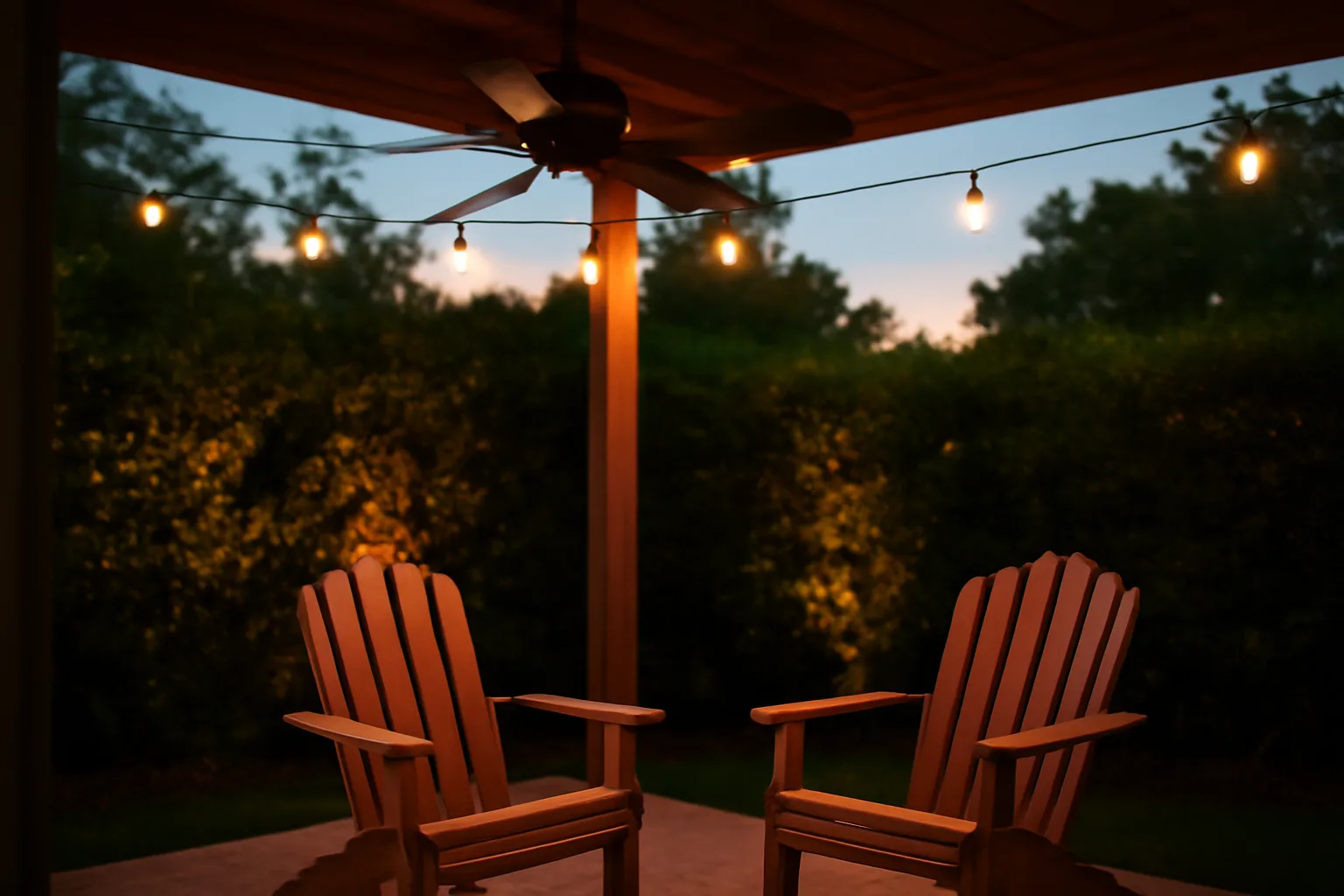
Keeping mosquitoes away from a specific space, your patio, deck, or the kids' play area, comes down to reducing what draws them in and adding a physical or chemical barrier between them and you. Start with airflow. Mosquitoes are weak fliers; most species can't handle much more than a light breeze, and a box fan or ceiling fan pointed across a seating area measurably cuts landing rates. This isn't folklore, it's basic aerodynamics: female mosquitoes weigh a few milligrams and struggle against wind over roughly 1 mph. Next, deal with resting habitat. Adult mosquitoes spend most of the day hiding in shaded, humid vegetation, tall grass, dense shrubs, ivy, and the underside of leaves. Keeping grass trimmed and shrubs thinned out removes daytime hiding spots, and it's also exactly where a professional barrier spray gets applied, since that's where the insecticide meets the most mosquitoes. Third, cut standing water within about 100-300 feet of the patio, since most home-invading mosquito species (like Culex and Aedes) don't range far from where they hatched [2]. Gutters, saucers under potted plants, tarps, birdbaths, and kiddie pools are the usual suspects. Finally, add citronella candles or torches if you like, but set expectations honestly: a widely cited study in the Journal of the American Mosquito Control Association found citronella candles reduced mosquito landing rates by roughly 42% compared to no protection, which helps but is nowhere near what a DEET-based repellent on skin achieves. Combine layers rather than relying on any single trick. A lot of homeowners land here after trying candles and citronella plants and still getting eaten alive during a summer party. That's normal. If you want the yard-level knockdown handled on a schedule instead of DIY, a seasonal barrier plan applied every 10-14 days is the standard professional approach, and you can get a free yard assessment to see what a property like yours actually needs before committing to anything.
How do you get rid of mosquitoes in the house?
Getting mosquitoes out of the house starts with finding how they're getting in, because a few strays inside usually means a gap somewhere, not an infestation. Check window and door screens for tears, even small ones. Mosquitoes only need a gap of a few millimeters. Look at weep holes in window frames, gaps around dryer vents, and door sweeps that don't fully seal at the bottom. If you have a lot of mosquitoes indoors repeatedly, there's a good chance there's a breeding site inside too: a clogged floor drain, a forgotten vase of water, an overwatered houseplant saucer, or a sump pump pit that holds water. For mosquitoes already inside, a few approaches actually work: - A handheld or plug-in insecticide spray labeled for indoor use, applied per the label instructions, in corners and dark spots where mosquitoes rest during the day.
- An indoor mosquito trap using UV light or CO2, useful for ongoing pressure but not an instant fix.
- Simply reducing indoor humidity and standing water sources, since mosquitoes need moisture to survive more than a day or two indoors.
- A fan running in the room; like outdoors, mosquitoes are bad fliers and tend to avoid moving air. One practical note: if mosquitoes keep showing up in one specific room, especially a bathroom or basement, check floor drains and any unused plumbing traps. A dry trap lets sewer-breeding mosquitoes and drain flies move freely between the pipe and your living space.
How do you get rid of mosquitoes in the backyard?
| Gutters | Clogged gutters hold water for weeks | Clean at least twice a year | |
|---|---|---|---|
| Tarps and covers | Pool in the folds after rain | Tighten or remove | |
| Birdbaths | Standing water refreshes slowly | Dump and refill every 3-4 days | |
| Tires, buckets, toys | Classic Aedes breeding sites | Empty, store upside down | |
| Tree holes and stumps | Hold water invisibly | Fill with sand or drill drainage | |
| French drains, low spots | Can pool after heavy rain | Regrade or add gravel | The CDC and most state extension services put weekly water-dumping at the center of backyard control because it directly targets the larval stage before mosquitoes ever become adults [1]. Larvicide products containing Bacillus thuringiensis israelensis (Bti), sold as "mosquito dunks," can go into water features you can't drain, like ornamental ponds or rain barrels; Bti is a naturally occurring bacterium that's EPA-registered for use in water and targets mosquito larvae specifically [3]. For the adult mosquitoes already flying around, a barrier spray applied to shaded vegetation, the underside of shrubs, and shady areas under decks and porches is the standard next step. Most professional programs apply on a 10-14 day cycle because that roughly matches the residual life of common pyrethroid-based products and the mosquito life cycle's speed; products break down faster in heat, rain, and UV exposure, so the interval isn't arbitrary. This is the approach behind Duskproof's seasonal barrier plans, and it's worth getting a property-specific read before assuming your yard needs the same treatment as your neighbor's. If a small pond, drainage ditch, or wetland area borders your property, that's outside what any backyard treatment can fully solve, and it's worth calling your local mosquito control district or health department, since many operate larviciding programs for public water on request [4]. |
Backyard mosquito control is 80% source reduction and 20% everything else, and most people have that ratio backwards. Start with a slow walk around your property with a checklist: | Item | Why it matters | What to do |
How do you get rid of ticks in your yard?
Tick control in the yard is a different battle than mosquitoes, because ticks don't fly in from a pond down the road, they live and quest in the grass and leaf litter right where you walk. The CDC and university extension research point to a few high-value interventions. Keep grass mowed short and clear leaf litter, brush, and tall weeds at the yard's edge, since ticks dry out quickly and avoid open, sunny areas. Cornell Cooperative Extension and CDC guidance both describe creating a 3-foot-wide barrier of wood chips or gravel between lawns and wooded areas or stone walls, since ticks rarely cross this dry zone to reach the lawn [5]. Move firewood piles, playground equipment, and patio furniture away from the yard edge and into sunny spots. Ticks cluster in the moist, shaded transition zone where lawn meets woods, called the "ecotone," and CDC materials specifically recommend keeping play areas away from this zone. For active tick populations, a licensed applicator can apply a tick-targeted barrier treatment to the same edge zones, often on the same 10-14 day seasonal schedule as mosquito treatments, since many products are labeled for both pests. If deer are frequenting your property, a four-poster tickicide device or fencing to limit deer access can help, though this is a bigger commitment than most homeowners take on. Check with your state's department of agriculture or health department before using any tick tube or rodent-targeted bait station, since regulations vary. If you're dealing with dogs or kids picking up ticks regularly, pairing yard treatment with a tick repellent for skin and clothing during peak season (typically spring through early fall in most of the U.S.) closes the gap that yard treatment alone can't.
What plants repel mosquitoes, and do they actually work?
A mosquito repellent plant is any plant that contains natural compounds, usually essential oils like citronellal, geraniol, or limonene, that mosquitoes are known to avoid at close range. Common examples include citronella grass, lemon balm, lavender, marigolds, catnip, and rosemary. Here's the honest limitation: the repellent effect comes from the oil, not the living plant. A pot of citronella grass on your patio does very little on its own because the plant isn't releasing enough oil into the air to matter. You'd have to crush the leaves and rub the oil on your skin, similar to how a DEET or picaridin repellent works, to get a meaningful effect, and even then the protection window is much shorter than a commercial repellent's. Research on catnip's active compound, nepetalactone, has shown repellency against certain mosquito species in lab settings, in some studies performing comparably to DEET at equivalent concentrations, but lab results don't always translate to a plant sitting in a pot on your deck getting rained on and baked in the sun [6]. Marigolds contain pyrethrum-related compounds, which is the same chemical family used in many commercial insecticides, but again, the concentration in an ornamental garden plant is nowhere near what's extracted for pest control products. So should you plant them? Sure, they're nice to look at, some pull double duty as culinary herbs, and there's no harm in adding lemon balm or lavender to a garden bed. Just don't expect a border of marigolds to replace a repellent or a barrier treatment. If you want a broader rundown of what's actually backed by research versus garden folklore, see natural mosquito repellent options, including plant oils formulated at effective concentrations.
When do mosquitoes go away for the season?
Mosquitoes typically become inactive once nighttime temperatures drop consistently below about 50°F, since most species stop flying and feeding in that range, though the exact cutoff varies by species and region . In much of the northern U.S., that means mosquito season winds down from late September through October. In the Gulf Coast, Florida, and southern California, mosquitoes can remain active nearly year-round in mild winters, particularly Culex species that can survive in a dormant, cold-hardy state and re-emerge on warm winter days. Adult female mosquitoes of some species overwinter in protected spots like culverts, crawl spaces, and hollow logs, entering a hibernation-like state called diapause, then become active again once spring temperatures climb back above roughly 50°F . This regional variability is exactly why season length isn't a single national answer. Your local mosquito control district or state extension office tracks trap counts and can tell you the realistic start and end dates for your specific area; the National Pesticide Information Center and most state agricultural extensions publish regional mosquito activity guidance updated seasonally . Practically, this means a barrier treatment plan should scale down (not necessarily stop) as temperatures fall, then ramp back up in spring. Many services adjust the treatment interval seasonally rather than running the same 10-14 day cycle year-round, since mosquito reproduction slows dramatically below about 60°F even before it stops entirely.
What's the difference between a barrier spray and a misting system?
A barrier spray is a targeted application, usually done by a technician with a backpack or truck-mounted sprayer, that coats the vegetation, mulch beds, and shaded structures where adult mosquitoes rest, typically repeated every 10-14 days through the season. A misting system is a permanently installed set of nozzles, usually along the perimeter of a property, plumbed to a reservoir and set to release a fine insecticide mist on a timer, often at dawn and dusk. Barrier sprays are the more common starting point: no installation, lower upfront commitment, and a technician can adjust the treatment plan visit to visit based on what they see (new standing water, denser growth, a change in mosquito pressure). The tradeoff is that protection fades over the interval between visits, especially after heavy rain washes product off leaves. Misting systems give more constant coverage since they fire automatically, which some homeowners prefer for properties with heavy mosquito pressure or a lot of outdoor entertaining. They cost more to install, they use more product over a season since they're releasing on a timer rather than only where mosquitoes actually rest, and some pest management professionals and environmental groups have raised concerns about non-target insect exposure from scheduled misting, since the mist doesn't distinguish mosquitoes from pollinators. If you go this route, ask specifically about which product is used, its label restrictions, and whether the system can be set to avoid daytime hours when bees are most active. Neither system is inherently better; it depends on your yard size, budget, and how much daily automation you want versus a scheduled visit. A mosquito control provider that offers both should be able to walk you through the tradeoffs for your specific property rather than pushing one option by default.
What ingredients are in an effective mosquito repellent?
The CDC and EPA recommend repellents registered with the EPA and containing one of a short list of active ingredients with proven effectiveness: DEET, picaridin, IR3535, oil of lemon eucalyptus (OLE, also sold as PMD), 2-undecanone, or para-menthane-diol . DEET remains the most studied; concentrations between 20% and 30% typically provide several hours of protection, and the CDC states that "higher concentrations of DEET provide longer-lasting protection, but the maximum protection time does not increase beyond a concentration of 50%" . Picaridin performs comparably to DEET at similar concentrations without the greasy feel some people dislike, and oil of lemon eucalyptus, at EPA-registered concentrations (not raw essential oil), has shown protection times close to low-concentration DEET in some field studies . What doesn't make the list: wristbands, ultrasonic devices, and most "natural" essential oil blends sold without EPA registration. The EPA does not evaluate ultrasonic mosquito repellent devices as effective, and no major published trial has shown wristbands provide meaningful protection beyond a few inches from the band itself. For a full comparison of ingredients, concentrations, and how long each realistically lasts on skin, see mosquito repellent options broken down by active ingredient.
How often should you treat your yard for mosquitoes and ticks?
Most professional barrier programs run on a 10-14 day cycle during active season, which lines up with two things: how fast the insecticide breaks down under UV, heat, and rain, and how quickly mosquito populations can rebound from new hatches. A single treatment knocks down the adult population you have at the moment of application. It doesn't touch eggs that haven't hatched yet or larvae developing in water you missed, and it doesn't stop new adult mosquitoes flying in from a neighbor's yard. That's why a one-time spray before a backyard party helps for that weekend but isn't a long-term fix, and why a seasonal cycle matters more than any single visit. Tick treatments often run on a similar interval but with fewer applications needed, since tick populations don't rebound as fast as mosquitoes; many programs treat tick zones (yard edges, wood piles, stone walls) 4-6 times per season rather than every two weeks across the whole property. Weather changes the math. Heavy rain within 24-48 hours of a treatment can wash product off foliage, and some services offer a free re-treatment if rain hits shortly after application; ask about this specifically when comparing quotes. If you're trying to figure out what a realistic schedule and cost look like for your specific yard size and vegetation, the only honest way to know is a walk-through. That's what a free yard assessment is for: a technician looks at your standing water sources, vegetation density, and how much mosquito or tick pressure your property realistically has, then proposes a plan instead of guessing from a phone call.
How do you choose between DIY prevention and hiring a service?
DIY prevention (water removal, repellent, plants, fans, screens) genuinely reduces bites and costs little beyond your own time. It's the right starting point for everyone, regardless of whether you eventually hire a service, because even a professional barrier treatment works better on a property where standing water has already been addressed. Where DIY hits a ceiling is coverage and consistency. A homeowner spraying a store-bought yard spray once might get a week of relief; a technician trained to identify resting sites, using a product applied at label-directed concentrations on a repeat schedule, generally sustains a bigger population reduction over a season. There isn't great independent long-term data comparing DIY spray-and-forget to professional recurring service head to head across many properties, so take population-reduction claims from any provider (including this one) as an estimate, not a guarantee; local vegetation, rainfall, and surrounding land use all move the number. Cost is the other factor. DIY products (sprays, plants, repellent, screens) run from roughly $10 to $100 for a season depending on what you buy. Professional seasonal programs vary widely by property size, vegetation density, and region, which is exactly why quote-based pricing after a yard walk-through tends to be more honest than a flat online price that ignores your specific property. If your yard has moderate mosquito pressure, decent drainage, and you're diligent about weekly water checks, DIY plus a good repellent may be enough. If you've got dense shade, a water feature, nearby wetlands, or you're just tired of losing every evening outside to bug spray and bites, a mosquito control near me search and a couple of free quotes will tell you fast whether professional treatment is worth it for your specific situation.
Frequently asked questions
How do you get rid of mosquitoes fast for an outdoor event?
Set up fans near seating areas since mosquitoes fly poorly in moving air, apply a DEET or picaridin repellent to skin, and consider a same-day barrier spray on surrounding vegetation 24-48 hours before the event. Citronella candles help modestly (studies show roughly 40% landing reduction) but shouldn't be your only defense for an important gathering.
How do you get rid of mosquitoes in the house overnight?
Check screens and door sweeps for gaps, then use an indoor insecticide spray labeled for that purpose in corners and closets where mosquitoes rest during the day. A fan running in the bedroom deters mosquitoes from flying near you, and an EPA-registered repellent-treated bed net is an option for infants or anyone who can't tolerate skin repellents.
What plants repel mosquitoes most effectively?
Citronella grass, catnip, lemon balm, marigolds, lavender, and rosemary all contain compounds mosquitoes tend to avoid, but the living, unbroken plant releases too little oil to meaningfully repel mosquitoes on its own. You'd need to crush leaves and apply the oil directly to skin to get a repellent effect comparable to a commercial product.
When do mosquitoes go away in fall?
Most species become inactive once nighttime temperatures drop consistently below about 50°F, which in northern states typically happens from late September through October. Southern and coastal regions with mild winters can see active mosquitoes nearly year-round, so check with your local mosquito control district for area-specific timing.
How do you get rid of ticks from your yard without chemicals?
Mow grass short, clear leaf litter and brush at the yard's edge, and install a 3-foot-wide barrier of wood chips or gravel between lawns and wooded areas, since ticks avoid dry, sunny open space. Moving play equipment and seating away from the woodland edge (the "ecotone") also reduces tick contact significantly.
How often do you need to treat your yard for mosquitoes?
Most professional programs treat every 10-14 days during active season, timed to the breakdown rate of the insecticide and the speed of the mosquito life cycle, which can complete in about 7-10 days. Treatments typically scale back or pause in cold months and resume as temperatures climb back above roughly 50-60°F in spring.
Can standing water in a birdbath really cause a mosquito problem?
Yes. Mosquitoes can lay eggs in water as shallow as a bottle cap holds, and a birdbath left untouched for a week or more provides enough time for eggs to hatch and develop into biting adults. Dumping and refilling birdbaths every 3-4 days breaks the cycle before it completes.
Do bug zappers actually get rid of mosquitoes?
Not effectively. Studies going back decades, including research published through university extension programs, have found that UV bug zappers kill mostly non-biting insects and only a small fraction of the insects killed are mosquitoes, since zappers attract by light, not the carbon dioxide and body heat mosquitoes actually key in on.
What's the difference between a mosquito barrier spray and a misting system?
A barrier spray is a technician-applied treatment to resting vegetation every 10-14 days, while a misting system is an installed set of nozzles that release insecticide automatically on a timer, usually at dawn and dusk. Misting systems offer more constant coverage but cost more to install and raise more questions about exposure to non-target insects like bees.
How do you get rid of mosquitoes in standing water you can't drain?
For water features you can't empty, like ponds, rain barrels, or fountains, use a larvicide product containing Bti (Bacillus thuringiensis israelensis), sold as mosquito dunks, which is EPA-registered and targets mosquito larvae specifically without harming fish or most other wildlife when used per the label.
Are natural or DEET-free mosquito repellents as effective as DEET?
Oil of lemon eucalyptus (OLE), at EPA-registered concentrations, has shown protection times in field studies approaching low-concentration DEET products, and it's one of the few plant-derived actives the CDC lists alongside DEET and picaridin. Most other "natural" essential oil blends without EPA registration haven't shown comparable duration of protection in controlled studies.
Why do mosquitoes seem worse in my yard than my neighbor's?
Differences usually come down to standing water, shade, and vegetation density; a yard with dense shrubs, uncleared gutters, or a low spot that holds rainwater will support far more mosquitoes than a well-drained, sunnier, well-maintained lawn nearby, even a few hundred feet away, since most home-invading species don't travel far from where they hatch.
Sources
- CDC, Prevention and Control of West Nile Virus: Mosquitoes lay eggs in standing water and weekly water removal is a core control step
- CDC, Mosquito Life Cycle: Most home-invading mosquito species don't range far from where they hatched
- CDC, Preventing Tick Bites on People: A wood chip or gravel barrier between lawns and woods deters tick migration onto lawns
- Cornell Cooperative Extension, Tick-Borne Disease Prevention: Ticks concentrate in the shaded ecotone zone between lawns and wooded areas
- USDA Agricultural Research Service, mosquito overwintering and diapause research: Adult mosquitoes become inactive below about 50°F and overwinter in diapause
- CDC, Preventing Mosquito Bites: CDC-recommended repellent active ingredients and DEET concentration guidance