Last updated 2026-08-14
TL;DR
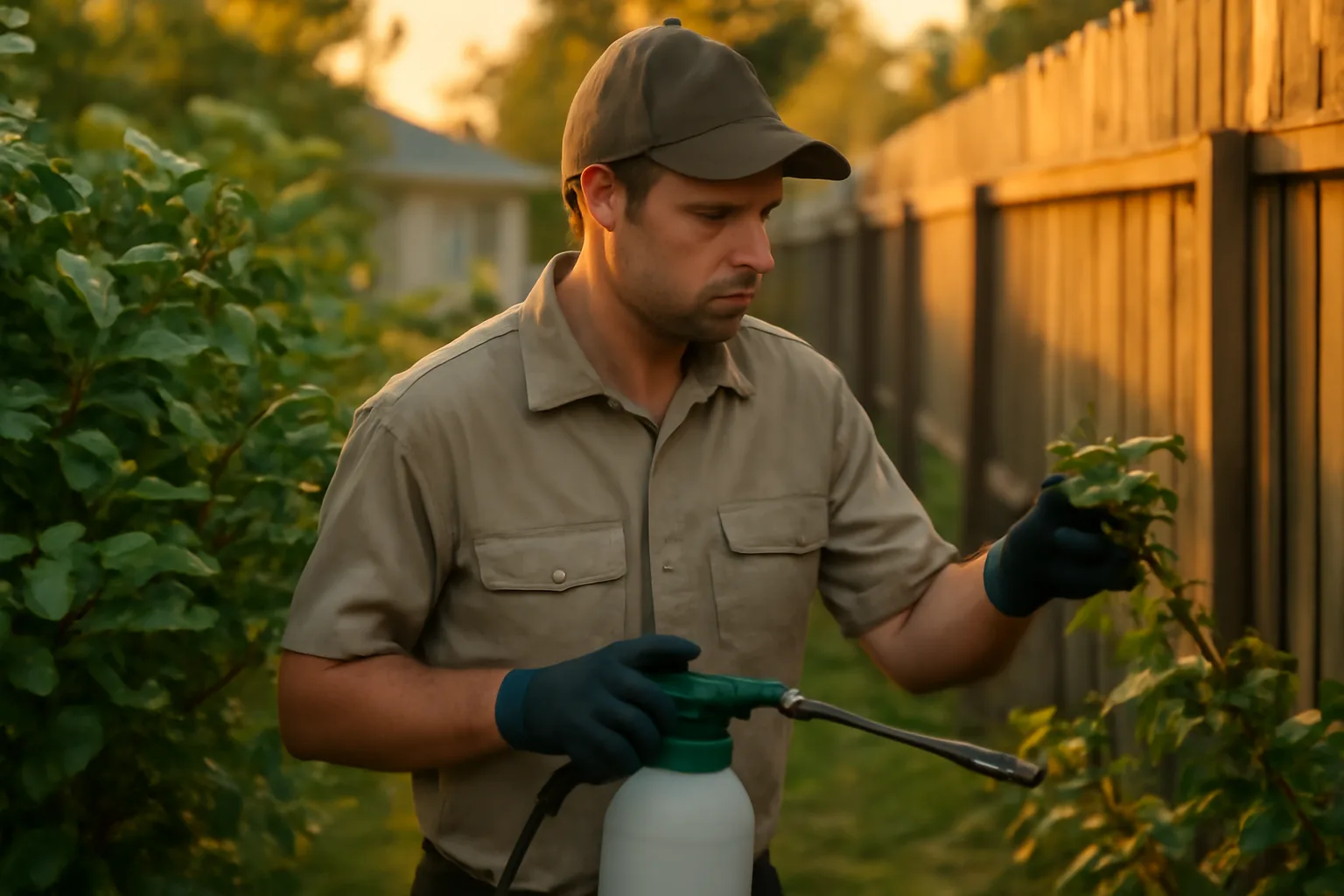
A good mosquito company runs a free yard walkthrough, treats standing water sources, and applies a barrier spray on a 10-14 day cycle during your active season. Expect $50-$100 per visit depending on lot size, per pricing surveys from HomeAdvisor and Angi. No company can eliminate mosquitoes; the honest ones say so.
What does a mosquito company actually do?
A mosquito control company sends a technician to walk your property, find standing water and vegetation where mosquitoes breed and rest, and then applies a barrier treatment to shrubs, tall grass, and shaded areas where adults hide during the day. Most residential programs repeat that barrier spray every 10 to 14 days through the warm season, because the products used break down and lose effectiveness over roughly two weeks [1]. The good ones also do source reduction: dumping out water in gutters, tarps, birdbaths, and clogged drains, since a female mosquito only needs a bottle cap of standing water to lay eggs. The Centers for Disease Control and Prevention notes that mosquitoes can complete their life cycle, from egg to biting adult, in as little as a week under warm conditions. Some companies also install misting systems, which are plumbed nozzle networks around the yard that release a pesticide mist on a timer, usually at dawn and dusk. These cost more upfront and require more maintenance than barrier spray visits, but they don't need a truck to show up every two weeks. No legitimate company will tell you they can eliminate mosquitoes from your yard. Mosquitoes fly in from neighboring properties, wetlands, and storm drains you don't control. What a decent program does is knock the population down enough that you can sit on your patio at 7pm without getting eaten alive. If you want a fuller rundown of the treatment options, see mosquito control.
How do I find a good mosquito company near me?
Start by asking whether the technicians are certified pesticide applicators in your state; most states require a commercial pesticide applicator license for anyone spraying professionally, and you can usually verify that license number through your state department of agriculture. Ask what specific product they use and pull up its EPA label online; every EPA-registered pesticide product has a public label you can read before it goes anywhere near your yard [2]. A legitimate quote process should include a free walkthrough of your property, more than a phone estimate. A technician needs to see your actual yard, your water features, your wood pile, your drainage, before they can tell you what a barrier plan should cost and how often it needs to run. Get the treatment cycle in writing. National pricing data from HomeAdvisor puts average per-visit mosquito treatments around $75 to $150, with recurring seasonal plans often running $350 to $700 for the full season depending on lot size and region [3]. Angi's cost data lands in a similar range, generally $50 to $100 per treatment for standard residential lots [4]. If a quote is dramatically below that range, ask exactly what's included and how long the treatment is expected to last. Finally, ask what they do about ticks, since most companies that spray for mosquitoes also treat yard perimeters and brush lines for ticks in the same visit. If you're comparing services, mosquito control near me breaks down what a service call should look like from first contact to first spray.
How do you get rid of mosquitoes, really?
Getting rid of mosquitoes is really three jobs done together: remove the water they breed in, treat the vegetation where adults rest, and reduce your own exposure while the population is knocked down. Skipping any one of the three means the other two work a lot less well. Source reduction comes first because it's free and it matters most. Walk your yard every few days during mosquito season and dump anything holding water: saucers under potted plants, kiddie pools, tarps, old tires, clogged gutters. The EPA specifically flags that mosquitoes can breed in water collected in items as small as bottle caps [5]. Barrier treatments are the next layer. A licensed applicator sprays a pesticide, often a pyrethroid, onto the underside of leaves and shaded, humid spots where adult mosquitoes rest during the day. This isn't a fog that kills mosquitoes on contact and disappears; it's a residual treatment meant to keep killing or repelling mosquitoes that land on treated surfaces for one to two weeks, which is why the 10-14 day retreatment cycle exists [1]. Personal repellent covers the gap. The EPA and CDC both recommend repellents registered with the EPA containing DEET, picaridin, IR3535, oil of lemon eucalyptus, para-menthane-diol, or 2-undecanone for direct skin protection, and note that these ingredients have been reviewed for efficacy and safety when used according to the label [6]. None of this makes a yard mosquito-free. It makes it livable.
How do I keep mosquitoes away long term?
Keeping mosquitoes away long term means treating it as a season-long maintenance job, not a one-time spray. The core routine: dump standing water weekly, keep grass and shrubs trimmed so there's less shaded resting habitat, and stay on a consistent barrier treatment cycle from the point mosquitoes become active until the first hard frost in your area. Check your gutters at least twice a season. Clogged gutters that hold water are one of the most common breeding sites right against the house, and homeowners routinely forget about them because they're not at eye level. Running fans on your patio helps more than most people expect; mosquitoes are weak fliers and a box fan or ceiling fan moving air across a seating area measurably cuts landing rates. It's not a replacement for treatment, but it's a genuinely useful low-cost layer. If you want a repellent option that doesn't involve DEET on your skin every evening, natural mosquito repellent covers what actually has evidence behind it and what's mostly marketing. And if you're deciding between DIY sprays and a bought product, mosquito repellent compares active ingredients side by side.
What plants repel mosquitoes, and should I rely on them?
| Citronella grass | Citronellol, geraniol | Minimal unless oil is extracted and applied |
|---|---|---|
| Lemon eucalyptus | PMD (also an EPA-registered repellent ingredient) | Some effect from extracted oil, not the plant itself |
| Catnip | Nepetalactone | Lab studies show repellency from concentrated oil only |
| Lavender | Linalool | Mild, localized, not yard-wide |
| Marigold | Pyrethrum-related compounds | Overstated; minimal real-world effect |
A mosquito repellent plant is a plant that contains compounds, usually in its leaves or essential oils, that mosquitoes are known to avoid or that have shown repellent activity in lab studies when the oil is extracted and concentrated. The plants most often mentioned are citronella grass, lemon eucalyptus, catnip, lavender, marigold, and basil. Here's the honest catch: the repellent effect comes from the essential oil, released in concentrated form, not from the living plant sitting in a pot on your patio. A study published in the Journal of the American Mosquito Control Association and repeated citations in extension literature note that intact plants release far too little volatile oil to meaningfully repel mosquitoes in open air; you'd need to crush the leaves and apply the oil directly to see any real effect [7]. So planting citronella around your deck won't hurt anything, and it looks nice, but don't count on it instead of a barrier treatment or a proper repellent on your skin. Think of repellent plants as a minor assist, not a plan. | Plant | Claimed active compound | Realistic yard impact |
How do I get rid of mosquitoes in my house?
Getting mosquitoes out of your house starts with finding how they're getting in, because indoor mosquitoes are almost always a door, screen, or drain problem rather than a sign your whole house is infested. Check window and door screens for tears, make sure exterior doors seal well, and look at anything holding water indoors, including plant saucers, unused vases, and pet water bowls that sit for days. A standing water source doesn't have to be outside to be a problem. Basement floor drains, sump pits, and even a bucket in a garage can support mosquito breeding indoors if they hold water long enough, generally seven to ten days is enough for eggs to become biting adults under warm conditions. For mosquitoes already inside, a few work fine as a stopgap: a fan pointed at problem areas, since mosquitoes fly poorly against airflow, and an indoor-labeled aerosol used strictly according to its EPA label in unoccupied rooms. Avoid outdoor barrier products indoors; labels differ for a reason, and using an outdoor-only product inside violates the label and the law under federal pesticide rules . If mosquitoes keep showing up indoors despite sealed screens and no obvious water source, it's worth having someone check crawl spaces and window wells, which are easy to miss and easy to treat once found.
When do mosquitoes go away for the season?
Mosquitoes generally become inactive once nighttime temperatures drop into the 50s Fahrenheit for a sustained stretch, and most species stop biting entirely after the first hard frost, though the exact date varies enormously by region and by species. In much of the northern United States that's sometime in October; in the Gulf Coast and parts of the Southwest, mosquitoes can stay active nearly year-round. The CDC notes that mosquito activity and disease risk generally follows warm-weather months but that ranges are shifting; some mosquito species are documented expanding their range into areas with historically shorter seasons as winters warm . That means the season length your parents dealt with in a given region may not match what you're dealing with now. Rather than picking a calendar date, check your local mosquito control district or agricultural extension office; they track trap counts and can tell you when local activity has actually dropped, more than when it typically does. This also matters for your treatment plan: barrier programs should run until local activity is genuinely gone, not stop on a fixed date.
How do I get rid of mosquitoes in my backyard?
Getting rid of mosquitoes in the backyard is the same three-part job as anywhere else, just concentrated on the space you actually use: eliminate standing water within about a 300-foot radius (roughly the flight range of most common backyard species during their lifetime), treat vegetation where adults rest, and consider supplemental protection for the times you're actually outside. Map your yard for water first. Under decks, inside unused planters, in the folds of a tarp, in a wheelbarrow left tipped the wrong way, gutters again. This single pass, done weekly, is the highest-value fifteen minutes you can spend on mosquito control and it costs nothing. For the vegetation side, a barrier treatment applied by a licensed technician targets the underside of leaves in shrubs, along fence lines, and in shaded mulch beds, the exact spots where adult mosquitoes rest between blood meals. This is the part most homeowners can't easily DIY well, both because backpack sprayers miss the undersides of leaves consistently and because getting the concentration and coverage right takes practice. If you're weighing a spray plan against installing a permanent misting system, that decision usually comes down to yard size and how much you value not having a truck show up every two weeks; misting systems cost more to install but run automatically. Either way, a free yard assessment is the right first step; a technician walking your specific yard will catch things a generic checklist won't. Get a free yard assessment.
How do I get rid of ticks in my yard?
Getting rid of ticks in your yard means treating the edges, not the middle. Ticks don't like open, sunny lawn; they cluster in leaf litter, tall grass, brush piles, and the transition zone between lawn and woods, sometimes called the tick habitat edge. The Connecticut Agricultural Experiment Station and other university tick research programs recommend creating a 3-foot-wide barrier of wood chips or gravel between lawn and wooded areas, since ticks are reluctant to cross a dry, open strip like that to reach a yard . Keeping grass mowed short and clearing leaf litter and brush from the yard's edge reduces tick habitat directly. Acaricide (tick-specific pesticide) treatments applied to the yard perimeter, especially along wood lines and stone walls, are the most effective chemical option and are often bundled into the same visit as mosquito barrier treatment, since the timing and target zones overlap. The CDC states that landscaping techniques combined with an acaricide application can reduce the number of ticks in a treated yard, though it also notes these methods don't eliminate the risk of tick bites entirely and personal protection still matters . Deer are a major tick host and reservoir; if deer are regularly in your yard, fencing them out or reducing attractants (like certain landscaping plants deer prefer) helps more than most homeowners expect. For repellents you put on your skin or clothing before working or playing in tick habitat, see tick repellent for what's actually shown to work against ticks specifically, since it's not the same list as mosquito repellents.
What should a free yard assessment actually include?
A real free yard assessment should include a walk of your entire property, not a driveway estimate. A technician should look at standing water sources, shaded resting habitat like shrub lines and mulch beds, tick habitat at the lawn's edge, and any structural entry points if you're also dealing with indoor issues. At the end, you should get a specific plan: what gets treated, how often (typically that 10-14 day cycle for barrier sprays), what months the plan runs, and a real price, not a vague range. If the company can't tell you the active ingredient in what they're spraying or won't show you the EPA label, that's a red flag. Ask what they do differently for ticks versus mosquitoes, since the target zones overlap but aren't identical. Ask how they handle a rainy stretch, since heavy rain can wash off residual barrier treatment early and a good company will proactively retreat rather than waiting for you to complain. Ask about pets and kids: reentry intervals (how long to stay off treated grass) are on the product label and a technician should be able to tell you the number without looking it up. This is a genuinely useful gut check for whether the company knows what it's doing or is just running a route.
Barrier spray vs. misting system: which is worth it?
Barrier spray visits and installed misting systems solve the same problem differently, and the right choice depends mostly on yard size, budget, and how much you mind a technician visiting every two weeks. Barrier treatments cost less upfront (per-visit pricing generally $50-$150 per HomeAdvisor and Angi cost data [3] [4]) and require no installation, but someone has to physically show up on the 10-14 day cycle for the treatment to stay effective. Miss a cycle during a rainy or busy stretch and control lapses. Misting systems cost significantly more to install, often several thousand dollars depending on yard size and nozzle count, but then run automatically on a timer, typically at dawn and dusk when mosquitoes are most active. They need periodic refilling and maintenance, and some municipalities and states have specific rules about automated pesticide misting systems, so it's worth checking local regulations before installing one. Neither option is inherently better; a small, simply-shaped lot with easy technician access does fine on barrier visits, while a large or complex property where you want zero visible maintenance might justify a misting system's higher upfront cost. A technician who's walked your actual yard during a free assessment is in a much better position to tell you which makes sense than a generic comparison chart.
Frequently asked questions
How do I get rid of mosquitoes fast before an outdoor event?
For a one-time event, a professional can do a targeted barrier spray 24 to 48 hours before, which knocks down resting adult mosquitoes on vegetation. Combine that with removing any standing water within a few days beforehand and setting up fans near seating areas. This won't eliminate mosquitoes, but it meaningfully reduces bites for the event window.
How often should a mosquito company spray my yard?
Most residential barrier treatments run every 10 to 14 days through the active season, because the pesticide's residual effect on treated foliage breaks down over roughly that window. Rain can shorten the effective period, so a good company will retreat sooner after heavy storms rather than sticking rigidly to the calendar.
What plants repel mosquitoes the best?
Citronella grass, lemon eucalyptus, catnip, lavender, and marigold are most often cited, but the repellent compounds only work in concentrated, extracted form. A living plant in a pot releases too little oil to meaningfully repel mosquitoes in open air, according to extension and entomology literature. Treat them as decoration, not defense.
How do I get rid of mosquitoes in my house overnight?
Check screens for tears, eliminate any standing water indoors (plant saucers, pet bowls, sump pits), and use a fan since mosquitoes fly poorly against airflow. An indoor-labeled aerosol used per its EPA label in an unoccupied room can help. Never use an outdoor barrier product indoors; the label doesn't allow it and it's a federal violation.
When do mosquitoes go away for the year?
Most species stop biting once nighttime temperatures drop into the 50s Fahrenheit consistently and become fully inactive after the first hard frost. That's roughly October in much of the northern U.S., but the Gulf Coast and Southwest can see activity nearly year-round. Check your local extension office or mosquito control district for actual local trap data.
How do you get rid of ticks in your yard without chemicals?
Create a 3-foot dry barrier of wood chips or gravel between lawn and wooded edges, since ticks avoid crossing it. Mow grass short, clear leaf litter, and remove brush piles where ticks and their rodent hosts live. This reduces tick habitat significantly but won't eliminate ticks entirely on its own.
Is it worth hiring a mosquito company or doing it myself?
DIY works for source reduction (dumping standing water) since it's free and effective. Barrier spraying is harder to DIY well because backpack sprayers often miss the undersides of leaves where mosquitoes actually rest. For consistent coverage on a 10-14 day cycle, most homeowners find a professional service more reliable than remembering to spray themselves.
How much does mosquito control cost per treatment?
National cost data from HomeAdvisor and Angi puts per-visit residential mosquito treatments around $50 to $150, with full-season recurring plans often totaling $350 to $700 depending on lot size and region. Get a specific quote from a free yard assessment, since price depends heavily on your property's size and layout.
Do mosquito misting systems really work?
Misting systems can effectively knock down mosquito populations because they release treatment automatically at dawn and dusk, peak mosquito activity times, without needing a technician visit. They cost more to install than barrier spray plans and need regular refilling and maintenance. Some areas regulate automated pesticide misting systems, so check local rules first.
What is a mosquito repellent plant?
A mosquito repellent plant is a plant containing compounds, like citronellol in citronella grass or nepetalactone in catnip, shown in lab studies to repel mosquitoes when extracted as concentrated oil. The intact, growing plant releases far too little of these compounds to meaningfully protect a yard on its own.
Can mosquitoes breed inside my house?
Yes, if there's standing water indoors long enough. Sump pits, floor drains, unused vases, and even a forgotten bucket can support the roughly 7 to 10 day life cycle mosquitoes need to go from egg to biting adult under warm conditions. Check anything holding water indoors, more than outside.
What should I ask a mosquito company before hiring them?
Ask for their state pesticide applicator license number, the specific product and EPA registration number they use, the treatment cycle length, reentry time for pets and kids, and whether the price on the quote is guaranteed or an estimate. A company that hesitates on any of these is worth skipping.
Sources
- CDC, Mosquito Life Cycle: Mosquitoes can complete their life cycle from egg to biting adult in about a week under warm conditions
- Angi, Mosquito Control Cost Guide: Standard residential mosquito treatments generally run $50-$100 per visit
- EPA, Find the Repellent that is Right for You: EPA-registered active ingredients including DEET, picaridin, IR3535, and oil of lemon eucalyptus are recommended for skin application
- Journal of the American Mosquito Control Association, plant-based repellent efficacy research: Intact repellent plants release too little volatile oil to meaningfully repel mosquitoes without extraction
- EPA, Federal Insecticide, Fungicide, and Rodenticide Act (FIFRA) overview: Using a pesticide in a manner inconsistent with its label is a federal violation
- CDC, Mosquitoes and Climate Change: Mosquito species ranges are expanding into areas with historically shorter seasons as temperatures warm
- CDC, Preventing Ticks in the Yard: Landscaping combined with acaricide application can reduce tick numbers in a yard but does not eliminate tick bite risk