Last updated 2026-08-14
TL;DR
Search for mosquito control companies near me and you'll get a mix of national franchises and local outfits, most offering barrier sprays on a 10-14 day cycle or an installed misting system. Ask about EPA-registered products, technician certification, and whether they treat standing water sources, more than perimeter foliage. Get a free yard assessment before comparing prices.
How do I choose between mosquito control companies near me?
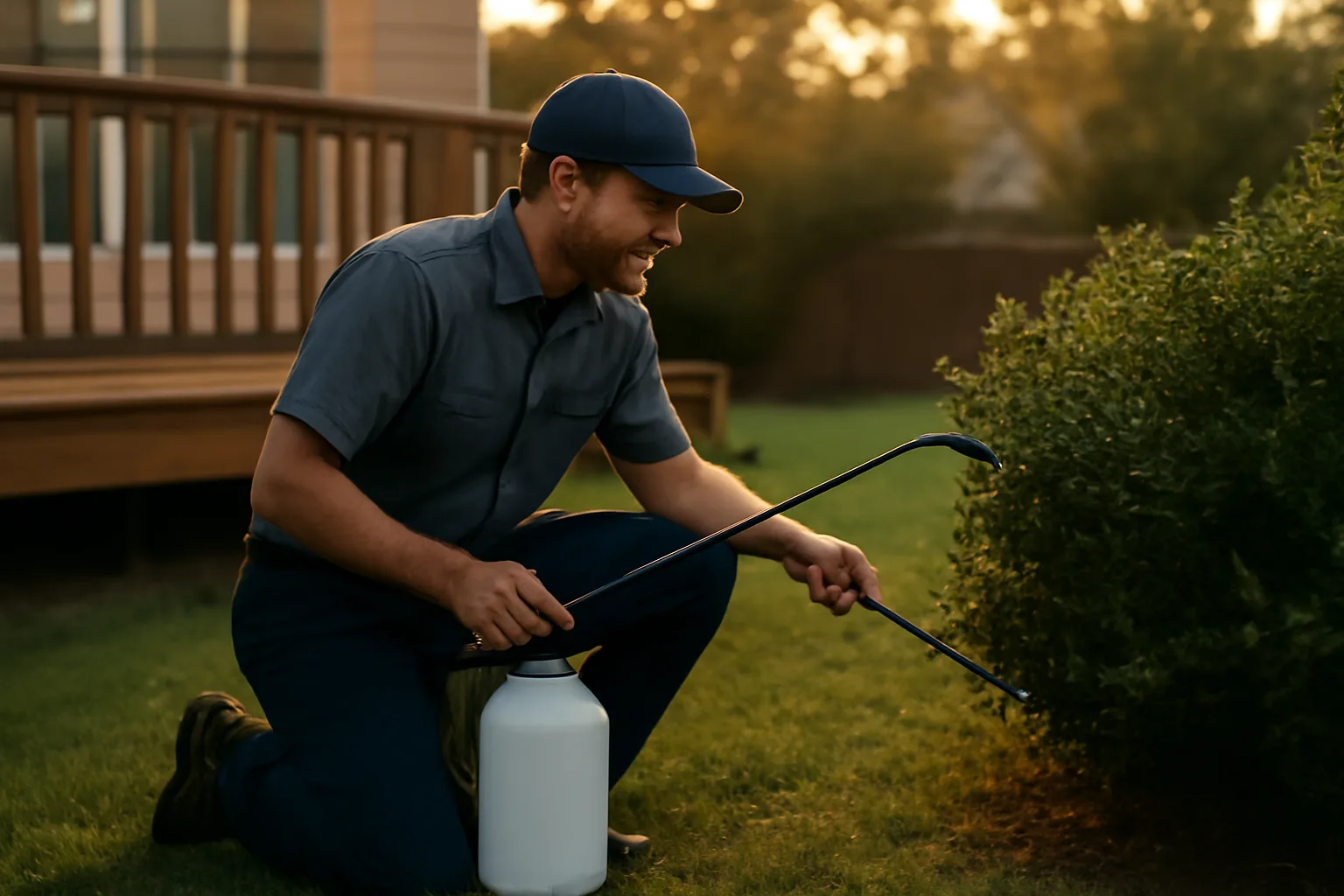
Start by figuring out what kind of service you're actually shopping for, because "mosquito control" covers at least three different products: a one-time fogging, a seasonal barrier spray plan, and a permanent misting system. They are not interchangeable, and companies often push whichever one they'd rather sell. A barrier treatment is a liquid application, usually a pyrethroid or a botanical like nootkatone, sprayed onto shrubs, tall grass, mulch beds, and the undersides of leaves where adult mosquitoes rest during the day. It knocks down existing populations and keeps working for roughly 10 to 21 days before it breaks down from sun and rain, which is why most companies run it on a 10 to 14 day cycle through the season [1]. A misting system does the same chemistry but through fixed nozzles on a timer, spraying automatically every evening rather than every two weeks. When you're comparing local companies, ask three things directly: what active ingredient do you use, is it EPA-registered, and will a licensed or certified technician actually do the application? Every state requires some form of pesticide applicator licensing for commercial work, and any product used has to carry an EPA registration number you can ask to see on the label [2]. A company that can't answer which product they're spraying is not one I'd hire. Don't skip the free assessment step even if you think you know what you need. A decent technician walks the property looking for standing water, breeding habitat, and resting sites before quoting anything, and that walk-through often changes the plan. If a company quotes a flat price over the phone without seeing your yard, that's a red flag, not a convenience.
How do I get rid of mosquitoes for good?
You don't, not permanently, and any company that promises full elimination is overselling. Mosquitoes fly in from neighboring properties, storm drains, and wetlands you don't control, and new adults emerge from eggs every few days in warm weather. What's realistic is population suppression: cutting the number of biting mosquitoes on your property by a meaningful percentage for as long as you keep treating. The CDC's guidance on mosquito control centers on an integrated approach: reduce standing water, use larvicides in water you can't drain, apply adulticides for existing populations, and use personal repellent for the mosquitoes that get through anyway [3]. No single step does the whole job. Source reduction alone won't stop mosquitoes flying in from three yards over. Barrier spray alone won't stop a kiddie pool breeding in your own backyard. Realistically, a professional barrier program combined with you dumping standing water weekly is the combination that actually moves the needle. Homeowners who skip the water step and rely only on spray tend to be disappointed, because a single forgotten bucket can produce hundreds of mosquitoes in under two weeks (see below).
How do I keep mosquitoes away from my yard and patio?
Keeping mosquitoes away long-term takes a layered approach: eliminate breeding water, treat resting vegetation on a schedule, and add a personal repellent for the mosquitoes that still show up. Mosquitoes need almost no water to breed. Several common species can complete their larval and pupal stages in water as shallow as what collects in a bottle cap or a discarded cup within about a week under warm conditions [4], which is why gutters, tarps, wheelbarrows, plant saucers, and old tires are such reliable producers even in a yard that looks dry. Walk your property once a week during mosquito season and dump anything holding water for more than a few days. For water you can't drain, like a decorative pond or a rain barrel, a larvicide containing Bti (Bacillus thuringiensis israelensis) is the standard fix. Bti is a naturally occurring soil bacterium that targets mosquito larvae specifically and is considered low-risk to fish, birds, and mammals when applied per label instructions [5]. It's sold in "mosquito dunk" form at most hardware stores and lasts about 30 days per application. For the adult mosquitoes already flying, that's where barrier treatment does its job, hitting the shady, humid resting spots (under decks, in ivy, along fence lines) where mosquitoes spend most of their time between blood meals. A mosquito control program timed to your local season, not a generic calendar, gets more value per application. If you want a rundown of what a treatment visit actually includes, that's worth reading before you call anyone.
What plants repel mosquitoes, and does a mosquito repellent plant actually work?
A mosquito repellent plant is any plant that contains compounds mosquitoes find irritating or that mask the carbon dioxide and body odor cues mosquitoes use to find you. Citronella, lemongrass, lavender, marigold, catnip, and rosemary are the most commonly cited examples, and there's real chemistry behind some of the claims: citronella oil is registered with the EPA as a biopesticide active ingredient used in commercial repellent products [6]. Here's the honest catch: having the plant in your garden is very different from having the compound in the air at a concentration that repels anything. The oils are sealed inside the leaves. Mosquitoes aren't bothered until the plant is crushed, rubbed, or distilled and applied to skin. A pot of citronella on the patio table smells nice and does close to nothing against a mosquito six feet away. If you like the plants, grow them, they're attractive and low-maintenance in most climates. Just don't let them replace source reduction or a treatment plan, and don't expect a repellent-plant border to do what a natural mosquito repellent spray or a barrier application does. Think of them as a nice-to-have, not a strategy.
How do I get rid of mosquitoes in my house?
Finding mosquitoes indoors usually means one of two things: they're riding in on you through doors and screens, or something inside is breeding them, most commonly a clogged drain, a forgotten vase of flower water, or a houseplant saucer that never dries out. Start with entry points. Check window and door screens for tears, make sure door sweeps seal at the bottom, and don't prop doors open at dusk, which is peak activity time for many common species. A single unscreened window is enough to keep a house stocked all summer. Next, hunt for indoor water. Empty and scrub plant saucers, check under-sink drain traps that may have dried out (letting mosquitoes access sewer lines), and look at any container that's held standing water for more than four or five days. Adult female mosquitoes lay eggs that hatch into larvae within about two days in warm water, and larvae can become biting adults in as little as a week under ideal conditions [4]. For mosquitoes already inside and flying, a fly swatter and patience beat most indoor sprays for a small number of insects. If it's a recurring problem room after room, that points to an active breeding site somewhere in the house or a crawl space, and it's worth tracing rather than just spraying repeatedly.
When do mosquitoes go away for the season?
Mosquito activity typically drops off once nighttime temperatures fall consistently below the mid-50s Fahrenheit, since most species become inactive or seek overwintering shelter below that threshold, though the exact cutoff varies by species and region [3]. In much of the northern U.S. that's late September to October. In the Gulf Coast, parts of Texas, and Florida, mosquitoes can stay active nearly year-round because winters rarely get cold enough to shut the life cycle down completely. Don't assume the first cool night ends the season. Many species can survive light frost, and eggs from some species (like Aedes, the container breeders behind Zika and dengue transmission concerns) can overwinter and hatch again the following spring [3]. A hard freeze that holds for multiple nights is a more reliable signal than a single chilly evening. Because the calendar varies so much by region, your best source for local start and end dates is your county extension office or state health department, which track regional mosquito surveillance data. This is also why a generic "treat April through October" plan from a national company is less useful than a company that adjusts the schedule to your actual local season.
How do I get rid of mosquitoes in my backyard specifically?
Backyard mosquito control comes down to three moves done consistently: drain what you can, treat what you can't drain, and knock down resting adults on a schedule. Drain: gutters, tarps, kiddie pools, unused planters, tire swings, birdbaths (refresh water every three to four days), and anything else that pools water after rain. This single habit removes more mosquito-breeding capacity than most homeowners realize, since standing water around the home is the primary breeding source for the mosquito species most likely to bite in yards [4]. Treat what you can't drain: ornamental ponds, rain barrels, and low spots that hold water after storms are good candidates for Bti dunks, which target larvae without broadly affecting other insects the way an adulticide spray would [5]. Knock down adults: this is where a barrier treatment earns its cost. A trained technician sprays foliage, mulch beds, under decks, and other shaded resting spots on a 10 to 14 day cycle through the season. Between visits, personal repellent containing DEET, picaridin, IR3535, or oil of lemon eucalyptus, all recommended by the CDC for skin application [7], covers the gap. If you're weighing a DIY spray-yourself approach against hiring out, the honest tradeoff is time and consistency: most homeowners start strong in May and skip visits by July, which is exactly when populations peak.
How do I get rid of ticks in my yard?
Tick control overlaps with mosquito control in method (barrier sprays reach both) but differs in target: ticks don't fly, they climb onto vegetation and wait (a behavior called questing), so their range is limited to path edges, tall grass, and brush lines, mostly within a few feet of the ground. The CDC and university extension research point to landscaping changes as the highest-leverage step: keeping grass mowed short, clearing leaf litter and brush, and creating a barrier of wood chips or gravel at least 3 feet wide between lawns and wooded areas, since ticks rarely cross a dry, open strip . This is sometimes called the "tick-safe zone" approach. Beyond landscaping, targeted pesticide application to the property perimeter, especially leaf litter, stone walls, and the lawn edge, is where a professional barrier treatment does real work; broadcasting pesticide across an entire lawn is usually unnecessary and more expensive than it needs to be, since most tick activity concentrates in that narrow edge zone . If you have pets or kids who use the whole yard, a tick repellent product on skin or clothing is still worth using even after a professional treatment, since no yard treatment gets every tick.
How do you get rid of ticks from your yard long term?
Long-term tick suppression is a maintenance habit, not a one-time fix. The landscaping changes above (short grass, cleared leaf litter, a wood-chip buffer) need upkeep every season, more than once. Wildlife management matters more for ticks than for mosquitoes. Deer and rodents are the main hosts that bring ticks onto a property and keep the population going nearby. Removing brush piles, securing trash, and reducing dense ground cover near the house limits the small-mammal habitat that sustains tick populations between blood meals. For the chemical side, timing matters. Many tick species have two active periods, a nymph stage in late spring through summer and adult activity in fall through early spring in milder climates, so a single spring application misses a lot of exposure. A seasonal barrier plan that revisits the property every 10 to 14 days through the relevant months, rather than a single spring treatment, catches more of both life stages . If ticks are a recurring problem on a property that borders woods or tall grass, that's a case where a professional program earns its cost. A mosquito control near me search often turns up companies that treat both pests in the same visit, since the equipment and target zones overlap heavily.
What should a free yard assessment actually cover?
A real assessment is a walk of the property, not a drive-by estimate. It should identify standing water sources, shaded resting habitat (dense shrubs, ivy, under decks, wood piles), and any conditions unique to the property, like a pond, low drainage area, or heavy tree cover that changes how often treatment is needed. A good technician also asks about your household: kids, pets, edible gardens, and anyone with chemical sensitivities, since those factors affect which products make sense and where the technician avoids spraying directly (like vegetable beds or pollinator plants). Ask specifically whether the company avoids spraying blooming flowers, since pollinator protection is a legitimate concern with any pyrethroid application and most EPA product labels include specific pollinator advisory language [2]. By the end of the visit, you should have a specific plan: which areas get treated, how often (the standard is a 10 to 14 day cycle through your local season), and whether a barrier program or an installed misting system fits your property better. A yard with dense mature landscaping and a lot of standing water risk sometimes leans toward misting for consistency; a smaller, more open yard often does fine on a barrier schedule alone. This is the point where getting a free yard assessment pays off even if you end up going with a different company. It costs you nothing and gives you a professional read on your specific property's risk factors, which is more useful than any generic checklist.
What does mosquito control typically cost, and is it worth it?
Pricing varies heavily by region, yard size, and whether you choose barrier spray or an installed misting system, so treat any number here as a range, not a quote. Barrier treatment programs from professional companies commonly run in the range of $30 to $100 per visit depending on lot size, billed on a recurring 10 to 14 day cycle through the season, which often adds up to several hundred dollars over a full season. Installed misting systems cost considerably more upfront (system installation plus ongoing refill service) but automate the application without a technician visit each time. Whether it's worth it depends on how much the problem actually affects your life. If mosquitoes are keeping you off your own patio in the evenings, or you've had ticks on pets or family members repeatedly, professional treatment often pays for itself in quality of life alone. If mosquito pressure in your area is mild and seasonal, a combination of source reduction and personal repellent might genuinely be enough, and paying for a service would be a bit of a waste. The honest way to find out is the free assessment: a technician who actually walks your yard can tell you whether your property has the standing water, vegetation density, or tick habitat that makes ongoing treatment worth the cost, versus a yard that's low-risk enough to manage yourself.
Frequently asked questions
How do I get rid of mosquitoes fast?
For immediate relief, remove any standing water within 100 feet of where you sit, since that's the typical flight range of resting adults, and use a fan on the patio, since mosquitoes are weak fliers and struggle in moving air. For a lasting fix, a professional barrier spray knocks down existing adults within hours and keeps working for 10 to 14 days.
How do I keep mosquitoes away naturally without chemicals?
Remove standing water weekly, run fans on patios (mosquitoes fly poorly in moving air), and use EPA-registered plant-based repellents like oil of lemon eucalyptus on skin, which the CDC lists as an effective active ingredient [7]. Citronella candles and repellent plants provide mild, short-range benefit at best and shouldn't be your only defense.
How do I get rid of ticks on my body or pets?
Remove an attached tick with fine-tipped tweezers, grasping close to the skin and pulling straight up without twisting, then clean the bite with soap or alcohol. For pets, ask your veterinarian about tick preventives; yard-based prevention (short grass, wood-chip buffers, and perimeter treatment) reduces how many ticks pets encounter in the first place.
What plants repel mosquitoes best?
Citronella, lemongrass, lavender, marigold, and catnip are the most cited mosquito repellent plants, and citronella oil specifically is registered with the EPA as a biopesticide active ingredient used in repellent products [6]. The plants themselves offer limited protection since the oils stay sealed in the leaves; you'd need to crush and apply the oil to skin for a real repellent effect.
How do I get rid of mosquitoes in my house overnight?
Check screens and door seals for gaps, since a single opening lets mosquitoes in continuously. Empty any standing water indoors (plant saucers, vases). For mosquitoes already inside, a fly swatter or a plug-in insect trap handles small numbers; recurring nightly mosquitoes usually mean an indoor breeding source you haven't found yet.
When do mosquitoes go away for the winter?
Mosquito activity generally drops once nights consistently fall below the mid-50s Fahrenheit, so most northern U.S. regions see activity fade by late September or October [3]. Gulf Coast and Florida regions can stay active nearly year-round since winters rarely get cold enough to fully stop the life cycle. Check your local extension office for regional dates.
How often should a professional treat my yard for mosquitoes?
Most professional barrier programs run on a 10 to 14 day cycle through the local mosquito season, since that's roughly how long the treatment remains effective before sun and rain break it down [1]. Misting systems apply more frequently, often nightly, on an automated schedule instead of a technician visit.
Do mosquito misting systems work better than barrier spray?
Misting systems apply more consistently since they spray automatically on a timer, which helps properties with heavy vegetation or standing water risk. Barrier spray visits every 10 to 14 days work well for most yards and cost less upfront. Neither eliminates mosquitoes; both suppress populations for as long as you keep treating.
Are mosquito barrier sprays safe for kids and pets?
EPA-registered products are legal for residential use when applied according to the label, but that doesn't mean they're harmless; the label specifies re-entry times (how long to stay off treated grass) and any pollinator or pet precautions. Ask your provider for the exact product label and follow posted re-entry guidance before letting kids or pets back on treated areas.
How do you get rid of ticks from your yard without spraying the whole lawn?
Focus treatment on the lawn edge, leaf litter, and brush lines where ticks quest, since most tick activity concentrates within a few feet of that border rather than across open lawn [8]. Add a 3-foot-wide wood chip or gravel buffer between lawn and woods, keep grass short, and clear leaf litter regularly.
What's the difference between a mosquito repellent plant and an actual repellent?
A repellent plant contains compounds mosquitoes dislike, but those oils stay locked inside the leaves until crushed or extracted. An actual repellent (DEET, picaridin, oil of lemon eucalyptus) is a concentrated, applied formula the CDC recognizes as effective on skin [7]. Growing the plant alone provides little real-world protection.
Can I do mosquito control myself instead of hiring a company?
Yes, for smaller yards with modest pressure: source reduction, Bti dunks for standing water, and a consumer barrier spray applied every 2 to 3 weeks can work. Larger properties, heavy tree cover, tick concerns, or a history of skipped treatments usually get better, more consistent results from a professional program on a fixed schedule.
Sources
- 40 CFR 152.15, Pesticide registration requirements: Pesticide products used in mosquito control must be EPA-registered and applied per label, including pollinator advisories
- CDC, Mosquito Control at Home: Integrated mosquito management combines source reduction, larvicide, adulticide, and personal repellent; mosquito activity and overwintering vary by species and temperature
- EPA, Mosquito Life Cycle: Mosquitoes can breed in very small amounts of standing water and complete egg-to-adult development in about a week under warm conditions
- EPA, Bacillus thuringiensis subsp. israelensis (Bti) Fact Sheet, EPA 738-F-01-002 (docket EPA-HQ-OPP-2009-0483): Bti is a naturally occurring bacterium used as a larvicide, considered low-risk to non-target species like fish, birds, and mammals when used as labeled
- EPA, Citronella (Oil of Citronella) Biopesticide Registration Review Decision, docket EPA-HQ-OPP-2011-0359: Citronella oil is registered by the EPA as a biopesticide active ingredient
- CDC, Prevent Mosquito Bites: CDC recommends EPA-registered repellents containing DEET, picaridin, IR3535, or oil of lemon eucalyptus for skin application
- CDC, Preventing Tick Bites on People: Landscaping strategies like short grass, cleared leaf litter, and a wood-chip barrier between lawn and woods reduce tick presence near the home