Last updated 2026-08-14
TL;DR
There's no single "mosquito shield" product that works alone. Real protection combines removing standing water, a barrier spray applied every 10-21 days during mosquito season, and repellent for the gaps. EPA-registered barrier treatments can knock down yard mosquito populations by roughly 80-90% for a week or two, but nothing eliminates them outright.
What is a "mosquito shield" and does it actually work?
People search "mosquito shield" expecting a single product, a spray, a plant, a bracelet, that blocks mosquitoes completely. That thing doesn't exist. What works is a layered system: get rid of standing water, apply a barrier treatment on a schedule, and use personal repellent for anything that slips through. The closest thing to a real "shield" is a professional barrier spray applied to vegetation, mulch beds, and shaded resting spots around your yard. Done correctly and repeated on a cycle, this approach can reduce adult mosquito landing rates in treated yards by a wide margin, university trials on backyard barrier sprays using pyrethroid products have shown reductions in the 80 to 90 percent range for one to two weeks post-application before mosquitoes filter back in from untreated areas [1]. That's the honest ceiling. No spray, plant, or device gets you to zero, and anyone claiming full elimination is selling something. The goal is knocking the population down enough that you can sit on the patio at 7pm without getting eaten, not sterilizing your property.
How do you get rid of mosquitoes for good?
You don't, not permanently, but you can get close enough that mosquitoes stop being the reason you avoid your own backyard. The approach that actually holds up is called integrated mosquito management, and it has three parts: source reduction, larval control, and adult control [2]. Source reduction means eliminating standing water: clogged gutters, plant saucers, tarps, old tires, birdbaths that sit for more than four days. The CDC notes that mosquitoes can complete their entire life cycle, egg to biting adult, in as little as 7 to 10 days depending on species and temperature, and many container-breeding species only need about a week's worth of standing water to do it [3]. Larval control targets water you can't dump out, ponds, rain barrels, low spots that pool after storms. This is where larvicides like Bti (Bacillus thuringiensis israelensis) come in. Bti is a naturally occurring bacterium that's toxic to mosquito larvae but has a strong safety profile for other organisms when used per label; the EPA has registered it as a biopesticide since the 1980s [4]. Adult control is the barrier spray, the fogging, the misting system, whatever knocks down the flying, biting population that's already emerged. This is the part most homeowners think of first, but it works best as the last layer, not the only one. Skip source reduction and you're re-treating a yard that keeps making new mosquitoes faster than you can spray them. For a broader rundown on methods and how professionals stack them, see mosquito control.
How do you keep mosquitoes away from your yard and patio?
Keeping mosquitoes away long-term takes three things running at once: no standing water, a barrier treatment reapplied on a schedule, and airflow or repellent for the hours you're actually outside. Start with a walk around your property every few days during warm months. Dump anything holding water for more than a couple days. Check gutters twice a season, they're one of the most common overlooked breeding sites because homeowners never look up. Barrier treatments matter because mosquitoes rest in shaded, humid vegetation during the day, tall grass, ivy, the underside of shrubs, and a spray applied to those surfaces keeps working as mosquitoes land on treated leaves over the following days. Most professional programs reapply every 14 to 21 days during peak season because pyrethroid residues break down with UV exposure, rain, and irrigation, and the reapplication interval on the label reflects that decay curve [5]. Some yards with heavy irrigation or frequent rain need the tighter end of that range, closer to 10 days. A box fan or outdoor fan on the patio helps more than people expect. Mosquitoes are weak fliers, most species top out around 1 to 1.5 miles per hour in still air, and a fan moving air across a seating area can push them off course enough to matter. For evenings you're hosting or just want extra insurance, personal repellent still closes the gap a yard treatment can't. See mosquito repellent for what the EPA-registered actives (DEET, picaridin, IR3535, oil of lemon eucalyptus) actually do and how long each lasts.
What plants repel mosquitoes, and do they actually work?
| Citronella grass | Citronellal | Mild, only when leaves are crushed/rubbed on skin | |
|---|---|---|---|
| Lavender | Linalool | Minor, localized | |
| Lemongrass | Citral | Mild, same issue as citronella | |
| Marigold | Pyrethrum-related compounds | Minor, mostly anecdotal | |
| Catnip | Nepetalactone | Some lab studies show promise, unproven outdoors | |
| Rosemary | Various terpenes | Minor when burned or crushed | Plant them if you like them in a garden. Don't count on them instead of source reduction or a barrier treatment. For actual repellent options with tested efficacy data, natural mosquito repellent covers which plant-derived actives (like oil of lemon eucalyptus) have real EPA registration behind them versus which are garden folklore. |
Several common plants, citronella grass, lemongrass, lavender, marigolds, catnip, and rosemary, contain compounds that repel mosquitoes in lab settings, but planting them in your yard is not the same as wearing repellent, and the effect at ground level is modest at best. The confusion comes from concentration. Citronella oil extracted and applied to skin has measurable, if short-lived, repellent activity. A citronella plant sitting in a pot on the patio releases those compounds passively and in tiny amounts, nowhere near what's needed to create a mosquito-free zone. University extension guidance is consistent on this: these plants may offer some localized, minor deterrent effect, but none of them function as a standalone control method [6]. Here's a reasonable way to think about them: | Plant | Repellent compound | Realistic effect |
How do you get rid of mosquitoes in the house?
Indoor mosquitoes almost always trace back to one of two things: a gap they're getting in through, or standing water inside (or right outside) that's breeding them. Fix the entry point and the water source, then clean up what's already inside. Check window and door screens for tears, even small ones. Mosquitoes need surprisingly little space to get through a damaged screen. Look at door sweeps, too; a gap under an exterior door is an open invitation at dusk when mosquitoes are most active. Inside water sources are easy to miss: a plant saucer that's been overwatered, a pet water bowl left out too long, a leaky pipe under a sink creating a damp spot. Even a vase of water sitting for a week can support developing larvae from eggs laid before you brought the flowers inside. For mosquitoes already in the house, a few things help fast. Run a fan in the room, moving air disrupts their flight and host-seeking behavior. Empty any standing water immediately. If you're dealing with a persistent indoor problem despite sealing entry points, that usually means there's an active breeding source nearby outside a door or window that keeps resupplying adults; that's worth tracing before assuming it's just "a few that got in."
How do you get rid of mosquitoes in your backyard specifically?
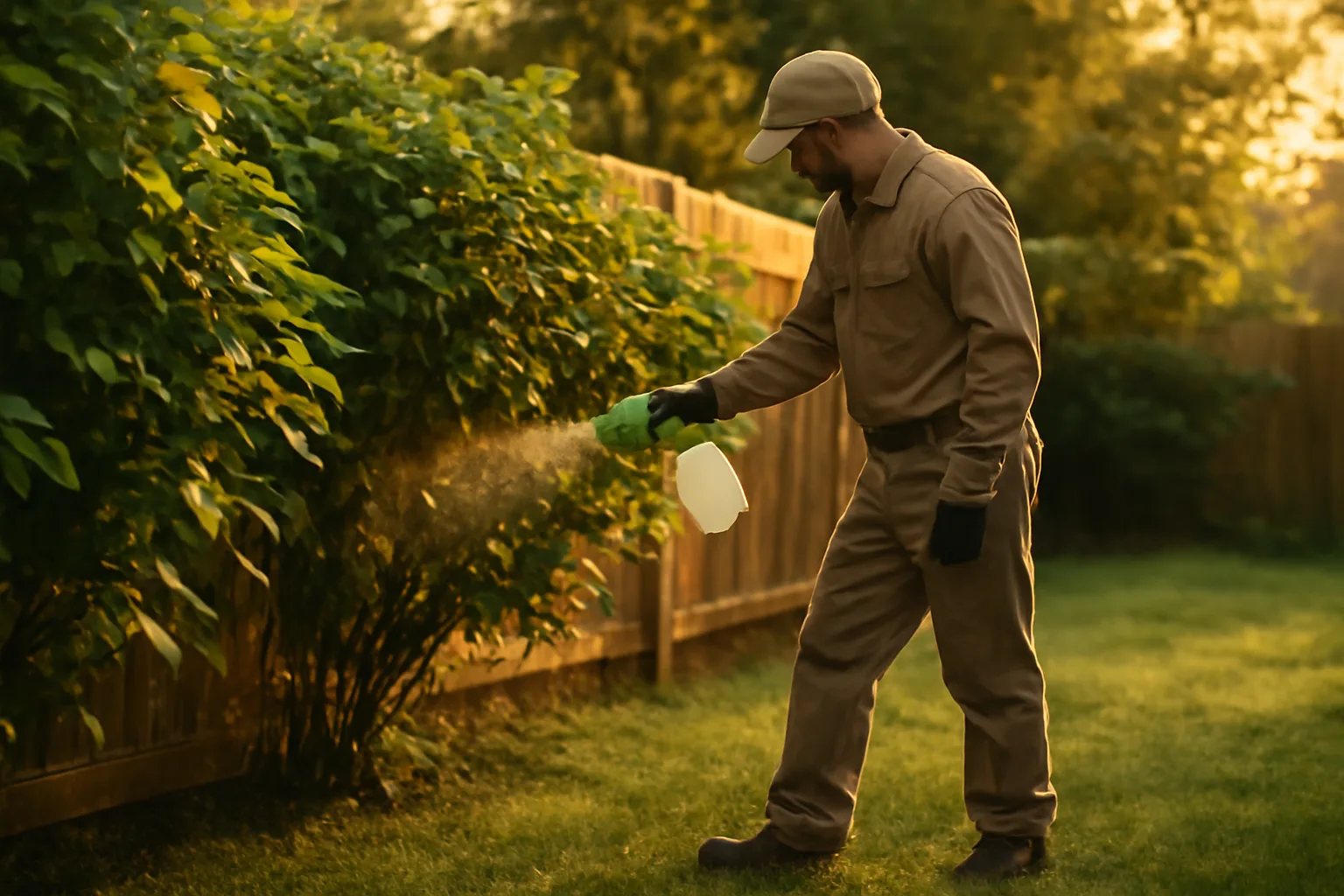
Backyard mosquito control comes down to four moves done consistently: eliminate standing water weekly, treat vegetation and shaded areas with a barrier spray on a 10 to 21 day cycle, add larvicide to water features you can't drain, and reduce harborage by keeping grass and shrubs trimmed back. Start with a five-minute audit. Walk the perimeter and look for: clogged gutters, tarps or covers that pool water, kids' toys or buckets left out, tree holes, low spots in the yard that hold water after rain, and the classic overlooked one, the saucer under a potted plant. For water features you're keeping (ponds, rain barrels, birdbaths), a Bti-based dunk or granule is the standard fix. These products are labeled for use in standing water and target mosquito larvae specifically without the broader impact of a general insecticide spray [4]. Replace dunks per label, usually every 30 days, more often after heavy rain dilutes them. For the barrier spray itself, professional applications typically use a pyrethroid (like bifenthrin or permethrin) applied with a backpack or truck-mounted sprayer to the lower canopy of trees, shrub lines, under decks, and tall grass edges where adult mosquitoes rest during the day. This is different from fogging, which kills what's flying at the moment of application but leaves no residual. A properly timed barrier spray keeps working on contact for one to three weeks depending on weather and reapplication schedule [5]. If you'd rather have this audited and handled on a schedule instead of doing it yourself every two weeks, a mosquito control near me search will turn up local services, most, including Duskproof, start with a free yard assessment to identify standing water and resting sites before recommending a treatment cycle.
When do mosquitoes go away for the season?
Mosquito activity typically drops off once nighttime temperatures consistently fall below 50°F, and most species stop being active once temps hit the mid-40s, but the exact date varies enormously by region and by species, so "mosquito season ends" doesn't mean the same week nationwide. In much of the northern U.S. and Canada, that's late September through October. In the Gulf Coast, Florida, and parts of the Southwest, mosquitoes can stay active nearly year-round in mild winters, and some species overwinter as adults in protected spaces, meaning a warm spell in January can bring a few back out. The CDC notes that mosquito activity is closely tied to temperature and rainfall patterns rather than a fixed calendar date, which is why local extension offices are the better source than a national average . Some species also handle cold differently. Culex mosquitoes, common West Nile virus vectors, often overwinter as adults in sheltered spots like basements, culverts, and storm drains, and can become active again during warm winter days . Aedes species, which include the aggressive daytime-biting Aedes albopictus, tend to die off with the adults but leave eggs that survive winter and hatch the following spring once temperatures and moisture return. Because of that variability, treat any "mosquitoes are gone by [date]" claim as a regional generalization, not a guarantee, and check your local mosquito control district or extension service for typical season length where you live .
How do you get rid of ticks, and how are they different from mosquitoes?
Ticks require a different approach than mosquitoes because they don't fly and don't breed in standing water, they live in leaf litter, tall grass, and brush, and they wait for a host to walk by rather than seeking one out actively. Getting rid of ticks means changing that habitat, not draining water. The CDC's tick-bite prevention guidance centers on landscape modification: keep grass mowed short, clear leaf litter and brush from around the yard edge, and create a barrier of wood chips or gravel, typically about 3 feet wide, between lawns and wooded areas or stone walls where ticks are common; this barrier restricts tick migration into recreational areas . Beyond landscaping, a tick-specific barrier treatment applied to the yard perimeter, especially the woodland edge, leaf litter zones, and tall grass, is the professional-grade version of the same idea. These treatments target the same resting and questing areas ticks use to ambush hosts. Products used are typically the same pyrethroid class used for mosquitoes, but applied with attention to ground-level vegetation and leaf litter rather than shrub canopy . Personal protection still matters even with a treated yard: EPA-registered repellents containing DEET, picaridin, or permethrin (applied to clothing, not skin) reduce tick attachment significantly, and the CDC recommends checking your body for ticks within two hours of coming indoors from tick habitat . See tick repellent for a full rundown of which actives work on ticks specifically versus mosquitoes.
How do you get ticks out of your yard, specifically?
Getting ticks out of a yard means combining a landscape overhaul with a targeted barrier spray on the perimeter, done once at the start of the season and again mid-summer, since ticks aren't drawn in by anything you can simply remove the way you remove mosquito breeding water. Start with the three-foot buffer zone: wood chips or gravel between your lawn and any adjacent woods, stone walls, or tall grass. This isn't decorative, it's functional; ticks generally won't cross a dry, sun-exposed strip because they dry out and die quickly outside humid, shaded leaf litter . Next, mow regularly and clear leaf litter, brush piles, and tall grass along fence lines. Ticks quest (wait with legs extended) on vegetation edges, not open lawn, so shrinking that edge habitat directly shrinks tick exposure. If you have deer visiting the property, that's a tick amplifier; deer ticks (Ixodes scapularis, the primary Lyme disease vector) rely on deer as a reproductive host. Fencing or deer deterrents can meaningfully cut tick pressure over a season, though this is a slower fix than a spray. For the barrier treatment itself, target ground level: leaf litter, the base of stone walls, the wood-line edge, under shrubs. This is different targeting than a mosquito spray, which focuses more on shaded shrub canopy where adults rest during the day. A combined program that treats for both, since yards with mosquito problems often have tick problems too, usually applies both zones in the same visit.
How does a barrier treatment work, and is it safe for pets and kids?
A barrier treatment works by applying an EPA-registered insecticide, most commonly a pyrethroid like bifenthrin or permethrin, to vegetation surfaces where mosquitoes and ticks rest, land, or travel. The residue continues affecting insects that contact treated surfaces for one to three weeks after application, until it breaks down from UV exposure, rain, and time [5]. On safety: no pesticide product should be called "safe" or "non-toxic" outright. What's accurate is that EPA-registered products have gone through a review process evaluating human health and environmental risk, and are legal to use only according to the specific label instructions, which include re-entry intervals (how long to stay off treated areas) and application rates [5]. The EPA states that "pesticide labeling is the law" and applying a product inconsistently with its label is a violation of federal law . Reputable services time applications to avoid direct contact during and shortly after spraying, typically recommending pets and kids stay off treated grass and shrubs until the spray has dried, usually a few hours. If you have a fish pond, beehives, or a vegetable garden nearby, tell your applicator; pyrethroids are notably toxic to bees and aquatic life, and a careful applicator will avoid direct treatment of blooming plants and water features [5] .
Barrier spray vs. misting system vs. DIY: what's actually worth it?
| Professional barrier spray | Low (no install) | Every 10-21 days in season | Most homeowners, flexible yards | |
|---|---|---|---|---|
| Installed misting system | High (plumbing/install) | Automated, timer-based | Large properties, heavy pressure, budget for install | |
| DIY spray/fogger | Low | Frequent, inconsistent | Light, occasional problems only | |
| Bug zappers | Low | N/A | Not effective against mosquitoes specifically | A free yard assessment is the fastest way to find out which category your property actually falls into, since lot size, shade, standing water, and neighboring vegetation all change the math. If you want that evaluated for your property, Get a free yard assessment. |
The right choice depends on how bad your mosquito pressure is, how much yard you have, and whether you want a recurring service handling it or a fixed installed system running on its own. A barrier spray program (professional, applied every 10 to 21 days in season) is the most common and most flexible option. It requires no permanent installation, can be adjusted seasonally, and typically costs less upfront than an installed system, though the ongoing per-visit cost adds up over a full season. An installed misting system uses a network of nozzles plumbed around the property that release a fine mist of insecticide on a timer, usually at dawn and dusk when mosquitoes are most active. These systems offer more frequent, automated treatment but cost significantly more to install and require a chemical reservoir refill on a schedule; some jurisdictions and applicator groups have raised concerns about over-application and non-target insect exposure with poorly managed misting systems, since they release product on a timer regardless of actual mosquito pressure that day. DIY approaches, over-the-counter sprays, bug zappers, citronella candles, foggers, generally underperform professional barrier treatments because they lack the reapplication discipline and the targeting of actual resting sites. Bug zappers in particular have been studied and found to kill mostly non-target insects, not biting mosquitoes, since mosquitoes aren't strongly attracted to UV light the way many zapper-caught insects are . | Option | Setup effort | Typical reapplication | Best for |
What does a realistic seasonal mosquito and tick plan look like?
A realistic plan starts a few weeks before mosquitoes typically become active in your region, usually when nighttime lows consistently clear 50°F, and continues on a barrier treatment cycle through the first hard frost or sustained cold snap. Early season (pre-season through first warm weeks): do a full source reduction sweep, clean gutters, dump standing water, service any water features with Bti dunks. This is also the time to start the tick-focused wood chip barrier if you don't already have one. Peak season (varies by region, often May through September in temperate climates): maintain the barrier spray cycle every 10 to 21 days, keep grass mowed short, and reapply Bti to water features monthly or after heavy rain. This is when reapplication discipline matters most, since a missed cycle in peak heat and humidity lets populations rebound fast. Late season: as temperatures start dropping, treatments can often stretch to the longer end of the reapplication window, but don't stop early just because it feels cooler in the evening; daytime highs still matter for mosquito activity. Off-season: in regions with a real winter, this is planning time, checking irrigation for pooling issues, evaluating whether last season's treatment schedule actually matched pressure, adjusting the wood chip barrier if it's thinned out. Because season length varies so much by region and even by year (a wet spring changes everything), the honest move is checking your state or county extension service or local mosquito control district for typical start and end dates where you live , and adjusting a seasonal plan around actual local conditions rather than a generic calendar. If you want a plan built around your specific yard, mosquito control walks through what a seasonal cycle covers before you request an assessment.
Frequently asked questions
How do you get rid of mosquitoes fast in a small area, like before a party?
For same-day relief, run box fans across the seating area (mosquitoes are weak fliers), apply EPA-registered personal repellent to guests, and consider a quick knockdown fog a few hours before guests arrive. This won't last, though; it's a stopgap, not a fix, and a scheduled barrier treatment days ahead works far better for an event.
How do you keep mosquitoes away without spraying chemicals?
Eliminate every standing water source (the biggest lever you control), run fans on your patio, use screens on windows and doors, and apply personal repellent when outside at dawn/dusk. This reduces mosquitoes meaningfully but won't match the population knockdown of a barrier spray, since resting adults in shrubs and tall grass go untreated.
How do you get rid of ticks on your body or clothing after being outside?
Check your body thoroughly within two hours of coming indoors, focusing on hidden spots (scalp, behind ears, underarms, waistband). Put clothes in a hot dryer for 10 minutes to kill any hitchhiking ticks; washing alone doesn't reliably kill them. The CDC recommends this two-hour check window as a core prevention step [10].
What is a mosquito repellent plant, exactly?
A mosquito repellent plant contains compounds (like citronellal in citronella grass or linalool in lavender) that have shown some repellent activity in lab tests, usually when the leaves are crushed and applied to skin. Simply growing the plant in a pot or garden bed provides a much weaker, localized effect, not a mosquito-free zone.
What plants repel mosquitoes the best?
Citronella grass, lemongrass, and catnip show the most repellent activity in lab studies, largely due to citronellal, citral, and nepetalactone. But extension research is clear these plants offer only minor, localized deterrence outdoors and shouldn't replace source reduction or a barrier treatment for real control [7].
How do you get rid of mosquitoes in the house overnight?
Seal gaps (check screens and door sweeps), remove any indoor standing water, and run a fan in the bedroom, since mosquitoes struggle to fly against moving air and are less likely to land on you. A bed net is a reliable low-tech option if the problem is severe enough to disrupt sleep.
How do you get rid of mosquitoes in the house that keep coming back?
Recurring indoor mosquitoes almost always mean an outdoor breeding source near an entry point, a gutter, a saucer, a low spot by the foundation. Trace and eliminate that water source; sealing screens alone won't stop it if fresh adults keep emerging just outside the door.
When do mosquitoes go away for the year in most of the U.S.?
Most regions see mosquito activity drop sharply once nighttime lows stay below 50°F, often late September to October in northern climates. Gulf Coast and southern states can see activity nearly year-round. Exact timing varies by species and by year, so check your local mosquito control district for typical dates [8][9].
How do you get rid of mosquitoes in your backyard without an installed system?
Weekly standing-water elimination, Bti dunks in any water feature you keep, and a barrier spray reapplied every 10 to 21 days handle most backyard pressure without installing anything permanent. This is the approach most professional barrier-spray services use instead of a plumbed misting system.
How do you get rid of ticks from your yard if you have wooded property?
Build a 3-foot wood chip or gravel barrier between lawn and woods, keep grass mowed short, clear leaf litter, and apply a ground-level barrier treatment to the wood line and leaf litter each season. Wooded and brushy edges are where ticks quest for hosts, so shrinking that habitat matters more than any single spray [10].
Are mosquito barrier sprays safe for pets and kids?
EPA-registered barrier products must be applied per label instructions, which include drying times and re-entry guidance; they should never be described as fully "safe" or "non-toxic." Most services recommend keeping pets and kids off treated areas until the spray dries, typically a few hours, and note any ponds, gardens, or bee activity beforehand [5][11].
How often should a mosquito barrier treatment be reapplied?
Most professional programs reapply every 10 to 21 days during active season, since pyrethroid residues break down from UV light, rain, and irrigation over that window. Heavier rain or irrigation pushes reapplication toward the shorter end of that range; drier, shadier yards can sometimes stretch longer [5].
Sources
- CDC, Mosquito Life Cycle: Mosquitoes complete their life cycle in as little as 7-10 days
- NASA/Smithsonian ADS via research on mosquito flight speed (cited via CDC mosquito biology overview): Mosquitoes are weak fliers relative to wind and fans
- CDC, Mosquito-Borne Diseases and Seasonality: Mosquito activity ties to temperature and rainfall rather than fixed calendar date
- CDC, West Nile Virus Vectors and Culex biology: Culex mosquitoes overwinter as adults in sheltered spaces
- CDC, Preventing Tick Bites on People: Wood chip/gravel barrier, landscape modification, and two-hour tick check recommendation
- University of Notre Dame / American Mosquito Control Association research summary on bug zappers: Bug zappers kill mostly non-target insects, not biting mosquitoes